

모즈타바 하메네이가 새로운 최고지도자로 선출된 것은 혁명수비대가 권력의 핵심을 장악
[최보식의언론=최영은 인턴기자]
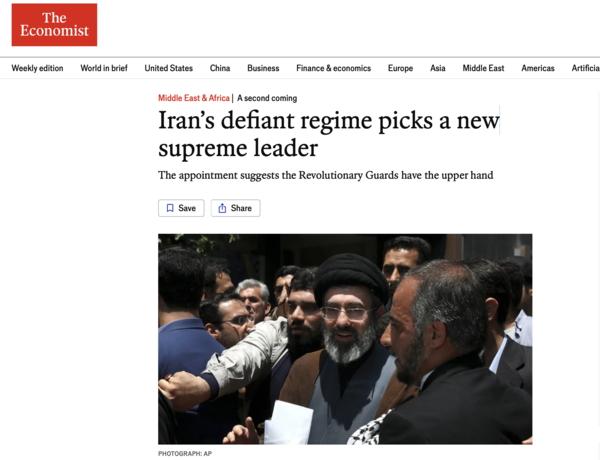
폭격으로 숨진 알리 하메네이의 아들 모즈타바 하메네이(Mojtaba Khamenei)가 이란의 새로운 최고지도자로 지명됐다고 이란 국영 매체가 8일(현지시간) 보도했다.
이에 앞서 트럼프 대통령은 모즈타바 하메네이가 후계자가 되는 것은 “용납할 수 없는 선택”이라고 말한 바 있다.
이번 발표는 이스라엘이 테헤란의 석유 저장 시설을 겨냥해 추가 공습을 단행한 지 몇 시간 만에 발표되었다.
CNN은 8일 자 ‘Iran's defiant regime picks a new supreme leader’(반항적인 이란 정권, 새 최고지도자 선택)이라는 제목의 기사에서 “모즈타바 하메네이가 새로운 최고지도자로 선출된 것은 혁명수비대가 권력의 핵심을 장악했음을 시사한다”고 보도했다.
이어 “아버지처럼 절대적 권력을 행사했던 인물과 달리, 모즈타바는 상징적인 지도자에 가까운 존재로 여겨질 가능성이 크다”며 “이번 승계는 실제 국가 통제권이 이슬람혁명수비대(IRGC)에 있음을 보여준다는 해석이 나온다”고 전했다.
그러면서 “모즈타바는 현재 암살 위험 때문에 지하 깊은 곳에 은신 중일 가능성이 크다”며 “그는 공습 이후 공개석상에 모습을 드러내지 않았으며 가족 일부가 사망했다는 소식까지 전해지면서 건강 이상설도 제기되고 있다”고 말했다.
올해 56세인 모즈타바 하메네이는 평생 외부에 드러내지 않는 은둔형 인물이지만 수십억 달러 규모의 경제 네트워크를 관리해온 ‘곳간지기’ 형 실세로 알려졌다.
CNN은 “그는 약 4천 명 규모의 최고지도자 궁정 조직인 베이트(beyt)를 운영하며 아버지의 권력을 관리했지만, 공개된 영상이나 기록은 거의 없다”며 “그를 만난 이란인들은 그가 조용하고 겸손한 성격이라고 말한다”고 소개했다.
하지만 그가 언제까지 살아서 이란을 이끌 수 있을지, 이것이 관건이다.
다음은 CNN의 기사의 주요 내용이다. (편집자)
미국과 이스라엘의 공습이 이어지는 가운데에서도 지난 일주일 동안 이란의 국가 운영은 놀라울 정도로 안정적으로 유지됐다.
2월 28일 암살되기 전 알리 하메네이 최고지도자가 내린 준비 지시는 계획대로 진행됐다. 초기 공습에서는 처음 알려진 것보다 이란 지도부의 피해가 적었으며, 대부분의 부사령관과 핵심 인물들이 살아남았다.
대통령 마수드 페제시키안, 국가안보회의 사무총장 알리 라리자니 등 주요 인물들도 모두 생존했다.
3월 9일(이란 시간) 새벽, 정권이 여전히 건재하다는 가장 강력한 신호가 나왔다. 바로 알리 하메네이의 아들 모즈타바 하메네이가 이란의 새 최고지도자로 지명된 것이다.
하지만 아버지처럼 절대적 권력을 행사했던 인물과 달리, 모즈타바는 상징적인 지도자에 가까운 존재로 여겨질 가능성이 크다.
이번 승계는 실제 국가 통제권이 이슬람혁명수비대(IRGC)에 있음을 보여준다는 해석이 나온다.
이 결정은 개혁파에게 큰 실망을 안겼다. 그들은 개혁 성향 지도자가 등장하기를 기대했기 때문이다.
또한 많은 성직자들도 불만을 가질 가능성이 크다. 신정 국가를 표방하는 체제에서 세습 권력 승계는 혁명으로 왕정을 무너뜨렸던 초기 이념과도 충돌하기 때문이다.
이 같은 갈등은 전문가회의가 모즈타바를 선출하는 데 시간이 오래 걸린 이유로도 지목된다.
전문가회의는 88명의 고위 성직자로 구성되는데, 이들의 회의 장소였던 콤(Qom)의 건물이 이스라엘 공습으로 파괴되면서 회의 자체가 어려워졌던 것으로 전해진다.
모즈타바는 현재 암살 위험 때문에 지하 깊은 곳에 은신 중일 가능성이 크다.
그는 공습 이후 공개석상에 모습을 드러내지 않았으며 가족 일부가 사망했다는 소식까지 전해지면서 건강 이상설도 제기되고 있다.
56세의 모즈타바 하메네이는 평생 은둔형 인물로 알려져 있다.
그는 약 4천 명 규모의 최고지도자 궁정 조직인 베이트(beyt)를 운영하며 아버지의 권력을 관리했지만, 공개된 영상이나 기록은 거의 없다.
그를 만난 이란인들은 그가 조용하고 겸손한 성격이라고 말한다.
하지만 동시에 수십억 달러 규모의 경제 네트워크를 관리해왔다.
그는 신학교에 갈 때 낡은 페이칸(Paykan) 자동차를 직접 몰고 다녔는데, 이는 과거 영국 힐만 헌터를 기반으로 만든 이란의 대표 자동차였다.
개혁파는 모즈타바를 강경하고 억압적인 인물로 본다.
그의 가장 가까운 정치적 동맹은 혁명수비대 정보조직을 이끌었던 성직자 호세인 타엡이다.
두 사람은 개혁파를 탄압하고, 2009년 강경 대통령 당선을 지원했으며, 이란을 신정민주주의 체제에서 사실상의 안보국가로 전환시키는 과정에 깊이 관여한 것으로 알려졌다.
성직자 사회에서도 불만이 나온다.
모즈타바는 헌법이 요구하는 최고지도자 자격을 충분히 갖추지 못했다는 비판이 있다.
그는 공식 공직 경험이 없고, 종교 권위를 인정받는 무즈타히드(mujtahid) 학술 논문도 발표한 적이 없다.
물론 대아야톨라(Grand Ayatollah)의 지위에도 오르지 못했다.
그가 물려받은 국가는 버티기와 붕괴 사이에 놓여 있다.
이란의 미사일 전력은 워싱턴과 텔아비브를 놀라게 했다.
보복이 두려워 걸프 아랍 국가들은 공격에 참여하지 않고 있다.
최근 정보 보고서에서도 이란 군 지도부 대부분이 여전히 작전 수행 능력을 유지하고 있다고 평가됐다.
그러나 전쟁이 9일째에 접어들면서 이란의 회복력도 시험대에 올랐다.
미국과 이스라엘은 1단계(군사력 파괴)에서 2단계(국가기관과 기반시설 공격로 작전을 확대하고 있다.
테헤란 중심부에 있던 최고지도자 사무실과 5천㎡ 규모 벙커가 공격을 받으면서 국가 운영 체계에 큰 공백이 생겼다.
현재까지는 식료품이 여전히 공급되고 있고 청소부들은 새벽에 거리를 청소하고 있다.
그러나 주민들은 테헤란이 이스라엘 공습 이후의 가자지구처럼 변해가고 있다고 말한다.
3월 8일 석유 시설 공격 이후 테헤란은 대규모 정전에 빠졌다.
고대 배수로에는 불붙은 기름이 강처럼 흐르며 상점과 주택을 태웠다.
비는 검은 기름이 섞인 진득한 물처럼 쏟아졌다.
항구 파괴와 국경 폐쇄로 수입이 막혔고, 공장 공격으로 국내 생산도 큰 타격을 입었다.
라마단 종료와 페르시아 신년 노루즈(3월 20일)를 앞두고 식량 부족 우려도 제기된다.
수자원 역시 위기에 놓였다.
남부 담수화 시설이 공격을 받으면서 물 공급이 불안정해졌다.
알리 하메네이는 사망 전 전쟁 대비를 위해 지휘권을 분산시켰다.
각 지역 지휘관에게 공격 목표를 미리 부여하고 중앙 통제가 사라져도 전투를 계속하도록 명령했다.
한 쿠르드 관리는 이란이 31개 군사 구역으로 분할되어 각 지휘관이 독자적으로 결정할 수 있는 체제라고 설명했다.
또한 민병대 조직 바시즈(Basij)는 5명 단위 소규모 조직으로 재편되었고 수십만 개의 무기가 배포됐다.
이런 분권화는 위험도 있다.
지휘관들이 군벌로 변할 가능성도 있다.
또한 주변국이 개입할 가능성도 거론된다.
UAE는 호르무즈 해협 근처 3개 섬을 오래 전부터 원해왔다.
터키는 이란 내 아제르바이잔계 보호를 명분으로 개입할 수 있다.
ISIS 계열 조직이 아프가니스탄에서 진입할 가능성도 있다.
이라크 쿠르드 지역 무장세력이 국경을 넘을 가능성도 있다.
이스라엘은 이란 군사력 제거를 위해 국가 붕괴 위험도 감수하려 한다.
그러나 미국의 목표는 불명확하다.
트럼프 대통령은 핵 협상 가능한 새로운 지도부 등장을 기대했지만 이번 승계는 그 기대를 무너뜨렸다.
전쟁 전 일부에서는 모즈타바가 사우디의 모하메드 빈 살만처럼 개혁 노선을 택할 수도 있다는 전망이 있었다.
그러나 가족이 공습으로 사망한 상황에서 그런 기대는 사라졌다.
그의 특징은 편집증과 보복이 될 가능성이 크다.
한 친척은 이렇게 말했다.
“그는 초강경파가 될 것이다.”
그가 아버지처럼 미국과 이스라엘에 대한 적대 정책을 유지할 가능성이 높다는 의미다.
하지만 무엇보다 먼저 해결해야 할 문제는 단 하나다.
그가 살아남을 수 있느냐는 것이다.
<기사 원문>
For a week Iran had functioned surprisingly smoothly under American and Israeli bombardment. Preparations ordered by the supreme leader, Ayatollah Ali Khamenei, before his assassination on February 28th, proceeded as planned. The first wave of air strikes killed fewer among Iran's leadership than first reported. Almost all the deputy commanders and key regime figures survived, including the president, Masoud Pezeshkian, and Ali Larijani, the secretary of the National Security Council.
Early on March 9th (in Iran) came the most defiant sign yet that the regime is still intact, with the naming of Mojtaba Khamenei, son of Ali, as the country's new supreme leader. Unlike his father, who had the last word, Mojtaba is likely to be seen as a figurehead. His succession shows that control of the country lies with the Islamic Revolutionary Guard Coup (irgc), the defenders of the Islamic Republic.
That will frustrate reformers, who may have hoped for one of their own. Many clerics will be disappointed, too. Dynastic succession in what purports to be a theocracy will be deeply unpopular with those who still believe in the ideals of a revolution that overthrew a hereditary monarchy.
Perhaps such disputes help explain why the Assembly of Experts took so long to elect Mojtaba. In addition, the committee, made up of 88 senior clerics, struggled to meet after Israeli strikes demolished its office in the holy city of Qom. Indeed, Mojtaba is likely to remain hiding deep underground, so as to protect himself from assassination-a fate Israel has vowed to visit on each successor. He has not been seen since the first strikes over a week ago and members of his close family are known to have died, leading to speculation about his own health.
Aged 56, Mojtaba has always been a recluse. Though he ran the beyt-the 4,000-man court that oversaw his father's hold on the state-almost no footage of him exists. Iranians who have met him describe him as modest and shy, though he managed an economic empire worth billions of dollars. He would drive to his seminary in a battered Paykan, Iran's version of the old Hillman Hunter.
Reformers see Mojtaba as a repressive figure. His closest political ally is Hossein Taeb, a cleric who once ran the feared intelligence arm of the irgc. Together they hounded reformists, backed-and it is said rigged-the election of a hardline president in 2009, and helped oversee Iran's transformation from a hybrid theocracy-cum-democracy into a security state that crushed dissent.
Clerics also have reason to complain. Mojtaba lacks the clerical and political qualifications that the constitution requires of a supreme leader. He has never held formal office. Nor has he published the scholarly treatise required of a mujtahid, a recognised source of religious authority-let alone attained the rank of grand ayatollah.
The country he has inherited is poised between endurance and collapse. The depth, severity and accuracy of Iran's missile arsenal has surprised officials in Washington and Tel Aviv. Such is the fear of retaliation that despite coming under repeated attack, the Gulf Arab states have so far refrained from joining the assault.
Instead, Iran-watchers speak of the regime's renewed cohesion and resolve, which had both ebbed in the twilight of the elder Khamenei's reign. There are few reports of defections. The generals commanding the irgc are prosecuting the war without civilian oversight. The military men are seemingly supplanting the clerics who the constitution says should be running the country. "Khamenei's death unshackled them," warns an Iranian businessman in exile. "They're more militant, nationalistic and emboldened."
That bears out external assessments, such as a Gulf intelligence report on March 5th, which noted that, "contrary to initial intelligence estimates, large segments of the Iranian military leadership remain operational." And it echoes an American intelligence report prepared shortly before the war, which had concluded an attack on Iran would be unlikely to dislodge the regime.
And yet, nine days into the fighting, Iran's resilience is being tested. Western forces are shifting from Phase I-America's and Israel's destruction of Iran's military capacity-to Phase II-the targeting of governing institutions and vital infrastructure. The strike against the supreme leader's office, along with his 5,000-square-metre (or 54,000-square-foot) bunker in downtown Tehran, has left a hole in the machinery of government.
Basic services are at risk. For now, Iranians say that groceries are still available in the capital. Dustmen sweep its streets at dawn as explosions echo around them. But increasingly, they say, Tehran resembles Gaza after Israel's attacks. The strike on oil facilities on March 8th first lit up the night and then after daybreak cast much of Tehran into darkness-even as the city's ancient drainage channels flowed like rivers of fire, burning oil and setting shops and homes alight. Rain poured a viscous black.
The economy is reeling. The destruction of ports and the closure of border crossings hamper imports; attacks on factories are crippling domestic production. Some officials worry that food stocks may run short ahead of the festival marking the end of Ramadan, the Muslim holy month of fasting, and Nowruz, the Persian new year, on March 20th.
Infrastructure is also under strain. A strike on a desalination plant in the south threatens water supplies, already badly strained before the war. Fuel is rationed. If attacks reach the oil- and gasfields-or the country's only major terminal on Kharg Island-gas supplies vital for electricity generation and cooking could be severed.
The widespread contempt which many Iranians had for their rulers, particularly after the massacre of many thousands of protesters in January, is giving way to anguish at the destruction of the state itself. But without the means to resist, a surge of national sentiment alone cannot defend the state.
In addition, Mojtaba could struggle to stamp his authority as supreme leader. Central control had been intentionally devolved by his father as part of his preparations for war. Before his death, local commanders were given sets of targets and were instructed to keep fighting in the event of the loss of central authority, say Iran-watchers. "We've heard they've divided Iran into 31 units-each with absolute command and authority to take all decisions without reference to a ministry or central command," says a Kurdish official monitoring Iran in Erbil, the Kurds' administrative capital in Iraq. The regime also split the Basij, the huge paramilitary force it uses to suppress dissent, into small cells of five, and distributed hundreds of thousands of weapons.
Moreover, the heads of the regime's various branches, scattered in bunkers-believed to be deep beneath the Zagros Mountains in western Iran, far from Tehran-are struggling to co-ordinate their message. Half an hour after Mr Pezeshkian apologised for missile strikes on the country's neighbours, the irgc fired fresh drones at Arab states across the Gulf.
This decentralisation brings risks. Commanders who already run rival smuggling networks could choose to become warlords. And Iran's neighbours might nibble at the state's weakened edges.
The United Arab Emirates has long coveted three small but strategic islands near the Strait of Hormuz. Turkey might intervene to protect Iran's Turkish-speaking Azeris, as it did for the far smaller number of Turkomans in Iraq and Syria. Fighters from Islamic State Khorasan Province, an offshoot of the group that once established a "caliphate" in Iraq and Syria, might advance from bases in Afghanistan. Most ominously, Kurdish fighters based in Iraqi Kurdistan could cross the frontier and seize Kurdish towns.
For Israel, disabling Iran's military might is worth the risk of chaos and state collapse. What America wants is less clear. Donald Trump, its president, may find that, as in Iraq, the creation of a failed state will haunt the Middle East for years, undermining stability and American power there. The new appointment is a setback for his hopes of seeing the rapid emergence of a strongman or junta with whom to strike a nuclear deal that secures Iran's 400kg of highly enriched uranium. Some exiled opposition figures are urging Mr Trump to end his war now, while Iran still has a centre, albeit a weakened one.
Iran 's new supreme leader and his irgc brethren also face some hard decisions. Should they fight on or look to bring the war to a swift end? Should they trade the nuclear programme for sanctions relief or seek to emulate nuclear-armed North Korea? How can they offer the benighted Iranian people a future?
Before the war, some had speculated that Mojtaba might become Iran's version of Mohammed bin Salman, the Saudi crown prince who sloughed off clerical control and eased confrontation with Israel. But the killing of his family is likely to have extinguished such hopes. His hallmarks are more likely to be paranoia and retribution. "He'll be an ultra-hardliner," says a relative. If so he may prefer to preserve his father's hostility towards Israel and America, to resist internal reform and to entrench the irgc's grip. But first, he has to survive.
#모즈타바하메네이 #이란권력승계 #중동전쟁
관련기사
- 이스라엘 언론인의 '중동전쟁 미국 패배'... 과연 사실일까?
- 트럼프, 왜 이란전쟁 시작했나... 40년 언론인의 시각
- 중동전 변수로 급부상 '쿠르드족'... 이들은 왜 국가가 되지 못했나
- 미국의 이란공격에, 왜 중국은 어정쩡한 입장이 됐나?
- 테러국가를 두둔하는 ‘중립 코스프레’의 논리
- 이란의 가성비 높은 무기 '샤헤드 드론', 그 정체는?
- 미국·이스라엘은 이란의 몇 번째 지도자까지 암살할 수 있을까
- 석유보다 LNG 대란?... 이란 폭격에 '카타르에너지' 가동 중단
- 트럼프에게 '김정은 독재'도 제거해달라는 보수 일각에게
- “군함 보내라” 트럼프 요구… 李대통령의 예상 응답은 '패가망신'?