

쿠르드족이 개입하지 않아도 전쟁은 충분히 복잡
[최보식의언론=김선래 기자]
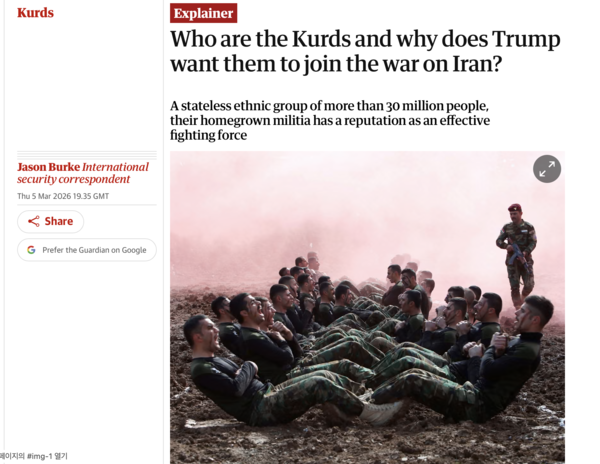
"(쿠르드족의 중동전 개입을) 전적으로 찬성(all for it)한다“던 트럼프 대통령의 돌연 입장을 바꿨다.
트럼프 대통령은 7일(현지시간) ”대이란 군사작전에 쿠르드족이 개입하는 것을 원하지 않는다“고 밝혔다.
이어 "나는 쿠르드족이 다치거나 죽는 모습을 보고 싶지 않다"며 "우리는 좋은 관계를 유지해왔다"고 설명했다.
입장을 바꾼 이유에 대해 "쿠르드족이 개입하지 않아도 전쟁은 충분히 복잡하다"고 덧붙였다.
중동전이 재발하면서 최근 다시 주목받은 쿠르드족은 약 4천만 명에 이르는 세계 최대의 ‘국가 없는 민족’이다.
제1차 세계대전 후 오스만 제국이 붕괴되면서 맺은 1920년 세브르 조약은 '쿠르디스탄'이라는 독립국가를 약속했다. 하지만 1923년 로잔 조약으로 그 약속은 무산되었고, 쿠르드 지역은 터키·이라크·시리아·이란으로 나뉘었다.
이로 인해 4개 국가로 분산된 쿠르드족은 화학무기 공격, 강제 이주, 언어 금지, 정치적 탄압 등 혹독한 탄압 속에서도 언어와 전통, 정체성을 지켜왔다. 특히 ISIS와의 전쟁에서 페슈메르가 등 쿠르드 군대는 미군과 연합군과 함께 싸우며 가장 신뢰받는 지상군으로 평가받았다. 쿠르드족은 수천 명이 희생됐지만 그들은 마을과 도시를 하나씩 탈환하며 전쟁의 흐름을 바꿨다.
다음은 영국 가디언이 지난 5일 보도한 ‘Who are the Kurds and why does Trump want them to join the war on Iran?’(쿠르드족은 누구이며 왜 트럼프는 그들이 이란 전쟁에 참여하기를 원하는가)라는 제목의 기사 전문이다.(편집자)
쿠르드족은 누구이며 왜 트럼프는 그들이 이란 전쟁에 참여하기를 원하는가
3천만 명이 넘는 인구를 가진 국가 없는 민족 집단인 쿠르드족은 자체 민병대가 강력한 전투력으로 유명하다.
쿠르드족은 자신들의 국가를 갖지 못한 세계 최대 민족 집단 가운데 하나다. 전 세계적으로 약 3000만~4000만 명이 있으며, 대부분은 아르메니아, 이라크, 이란, 시리아, 터키의 국경 지대에 걸쳐 있는 산악 지역에 살고 있다.
쿠르드족은 자신들의 역사를 고대 중동 민족인 메디아인(Medes)과 연결하지만, 오스만 제국이 붕괴하면서 현대 중동의 국경이 형성되던 약 100년 전 국가를 갖지 못한 채 남게 되었다.
정치적 경쟁이 격렬한 중동 지역에서 반복적으로 충돌 속에 휘말렸던 쿠르드족은 종종 자체 민병대인 페슈메르가(peshmerga)에 의존해 자신들을 방어해 왔다.
쿠르드족은 이러한 험난하고 피로 얼룩진 역사 속에서 “우리에게 친구는 산뿐이다”라는 말을 하게 되었다고 말한다.
독자적인 문화와 좌절된 국가의 꿈
쿠르드족 내부에는 다양한 차이가 존재하지만, 그들은 독자적인 문화를 가지고 있다.
페르시아어와 관련된 쿠르드어(여러 방언 존재), 전통 의상, 음악, 음식 문화, 그리고 강한 정체성을 공유한다.
쿠르드 민족주의는 19세기 후반에 뿌리를 두고 있지만, 독립 국가에 대한 꿈은 계속 좌절되었다.
영국과 이후 미국 등 강대국들이 쿠르드 민족 국가 건설을 지원하겠다는 약속을 여러 차례 했지만, 그 약속은 대부분 지켜지지 않았다.
쿠르드족의 대부분은 수니파 무슬림이지만, 다양한 종교적 소수 집단도 존재한다.
반복된 탄압의 역사
제2차 세계대전 이후 중동 지역의 여러 권위주의 정권과 정부는 쿠르드족을 잔혹하게 탄압해 왔다.
수많은 공동체가 강제로 이주되거나 학살되었다.
외부 강대국들은 종종 정치적 영향력을 확보하기 위해 쿠르드족을 이용했고, 그 과정에서 내부 분열과 경쟁이 심화되었다. 이러한 개입은 쿠르드 사회에 종종 재앙적인 결과를 가져왔다.
터키·이라크·이란·시리아에서의 갈등
터키
터키에서는 쿠르드노동자당(PKK)과 정부군 사이의 장기 충돌이 이어졌다.
PKK는 처음에는 쿠르드 독립국가 건설을 목표로 했고 이후 자치권을 요구했다.
이 갈등으로 4만 명 이상이 사망했고, 터키 남동부 지역에서 수많은 사람들이 삶의 터전을 잃었다.
이라크
이라크에서는 사담 후세인 정권이 북부 쿠르드족에게 화학무기를 사용했다.
그러나 1991년 걸프전 이후쿠르드족은 북부 지역에서 준자치 지역을 형성해 지금까지 통치하고 있다.
이란
이란의 쿠르드 지역은 1979년 이란 혁명 이후 중앙정부에 대한 저항의 역사를 가지고 있다.
최근에는 2022년 대규모 반정부 시위에서 주요 분쟁 지역이 되었는데, 이는 이란계 쿠르드 여성 마흐사 아미니(Mahsa Amini)가 구금 중 사망하면서 촉발되었다.
또한 2025년 12월 시작된 반정부 시위 이후 2026년 1월까지 수천 명이 사망했다.
시리아
시리아 내전 동안 쿠르드족은 자치 지역을 건설하려는 시도를 했지만 결국 실패했다.
이는 쿠르드족이 미국 주도 연합군과 함께 이슬람국가(IS)를 격퇴하는 데 핵심적인 지상군 역할을 했음에도 불구하고 일어난 일이다.
주요 이유는 미국이 쿠르드 독립 요구보다 새로운 시리아 국가 체제와 터키와의 관계를 우선시했기 때문이다.
‘죽음을 마주하는 자들’ 페슈메르가
쿠르드 민병대 페슈메르가는 쿠르드어로 “죽음을 마주하는 사람들”이라는 뜻이다.
이들은 가벼운 무장을 갖고 있음에도 불구하고 지형에 대한 이해, 높은 기동성, 강한 동기를 통해 강력한 전투력을 보여 왔다.
또한 이 과정에서 미국 정부와 군과의 협력 관계가 형성되었다.
트럼프 행정부의 전략
보도에 따르면 트럼프 행정부는 이란 내 쿠르드 반정부 세력을 활용해 테헤란 정권을 압박하는 방안을 검토하고 있다.
미국의 공중 지원과 군사 고문이 제공될 경우 쿠르드 전투원들은 이란 내 쿠르드 지역을 장악하고 유지할 수 있다고 분석된다.
하지만 전문가들은 이들이 국경을 넘어 깊숙이 진격하는 것은 현실적으로 어렵다고 말한다.
대신 목표는 다음과 같다.
- 이란 군이 국경 지역으로 병력과 자원을 분산하도록 만들기
- 이란 내부의 다른 소수 민족들에게 반정부 행동을 유도하기
그러나 쿠르드 지도자들은 신중하다
하지만 위험도 많다.
쿠르드 지도자들은 이러한 점을 누구보다 잘 알고 있다.
현재 이라크 북부의 주요 쿠르드 지도자들은 중립을 유지하겠다고 밝히고 있다.
그 이유도 분명하다.
중동에서 전쟁이 벌어질 때마다 쿠르드족은 종종 강대국들의 충돌 속에서 희생양이 되어 왔기 때문이다.
그래서 쿠르드족은 다시 한번 이렇게 말한다.
“우리의 진짜 보호자는 우리 주변의 산뿐이다.”
<기사 원문>
A stateless ethnic group of more than 30 million people, their homegrown militia has a reputation as an effective fighting force
The Kurds are one of the biggest ethnic groups in the world without their own state. Numbering between 30 and 40 million worldwide, most live amid the peaks and valleys straddling the borders of Armenia, Iraq, Iran, Syria and Turkey.
Though they link their history to that of the Medes, an ancient Middle Eastern people, the Kurds were left stateless a century ago when the borders of the modern Middle East emerged from the collapsing Ottoman empire. Repeatedly caught in the bloody political competition of a volatile region and often forced to rely on their homegrown militia, the peshmerga, for defence, the Kurds say their tough and often bloody history has taught them that they have "no friends but the mountains".
Despite significant diversity, the Kurds have their own distinct culture, with a language related to Persian that has many dialects, traditional dress, music, cuisine and identity. Their nationalism has its roots in the late 19th century but dreams of a homeland have been repeatedly dashed, and promises made across a century or more by imperial powers such as Britain and then the US to support their national ambitions have gone unfulfilled. Most are Sunni Muslim but there are significant religious minorities.
Since the second world war, a series of authoritarian regimes, rulers and governments in the region have brutally repressed Kurds, displacing and killing entire communities. Outside powers have sought to exploit the Kurds to gain leverage, sowing damaging dissension and rivalry. Such interventions frequently brought disastrous results for Kurdish communities.
In Turkey, a long conflict between security forces and the PKK, a leftist group that first fought for an independent Kurdish state and then autonomy, has killed more than 40,000 people and displaced many more in the country's south-east.
In Iraq, Saddam Hussein used chemical weapons against Kurds in the north, though after the Gulf war of 1991 they were able to carve out a semi-autonomous zone that they have governed ever since.
Iran's Kurdish regions have a historical record of resistance to central authority that goes back to the revolution of 1979 and beyond. More recently they were a major flashpoint during a large wave of domestic unrest in 2022, when nationwide protests were triggered by the death in custody of Mahsa Amini, who was Iranian-Kurdish, and again following anti-government protests that began in late December 2025 and led to thousands of people being killed in January 2026.
In Syria, efforts during the last decade's civil strife to build an enclave there ultimately failed, despite the Kurds' key role as ground fighters in the successful campaign waged by the US-led coalition to defeat Islamic State there and also in Iraq.
A key factor was a US decision to privilege the consolidation of a new Syrian state and relations with Ankara over Kurdish aspirations.
That effort, which cost many Kurdish lives, consolidated the reputation of the peshmerga - the name means those who face death - as effective fighters whose knowledge of terrain, mobility and motivation compensate for their light weaponry even against tough enemies. It also built connections with US officials and military personnel, and refined tactics that could be deployed in coming weeks if, as reported, the Trump administration seeks to use fighters from Iranian-Kurdish opposition groups to undermine current rulers in Tehran.
With air support and US military advisers on the ground, the peshmerga could seize and hold territory in Kurdish-dominated areas in Iran but any suggestion they could advance much past the frontier is unrealistic, analysts say.
Instead the aim would be to force Iranian military commanders to divert precious troops and resources to marginal border battlefields while possibly inspiring other ethnic communities within Iran to launch their own campaigns - also potentially with US assistance.
But there are multiple potential pitfalls - as their leaders know well. For the moment, mainstream Iraqi-Kurdish leaders in northern Iraq are insisting they will stay neutral. This is understandable. When wars come the Kurds have often been caught in the crossfire, underlining once again their only true protectors are the peaks around them.
This article was amended on 6 March 2026. Peshmerga means those who face death, rather than those who seek death.
#쿠르드족 #중동정세 #국제정치