

It is a case that asks how freely writers in South Korea can speak.
[Choice Times=Seollae Kim, Staff Reporter]
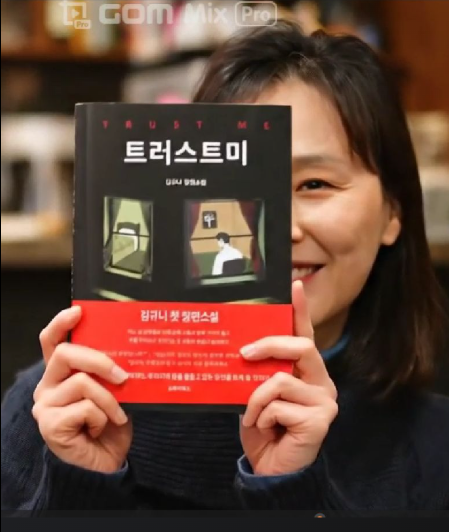
“The situation in which a writer faces legal sanctions for expressing a critical opinion about culture and literature could set a precedent that undermines freedom of expression and creative freedom.”
On the 8th, the preparatory committee of the Liberal Writers’ Association issued a statement regarding the upcoming April trial of writer Kim Gyuna, who was accused of disparaging the May 18 Gwangju Democratization Movement and the Nobel Prize in Literature awarded to author Han Kang. The committee said that “no authority should attempt to control the world of literature and ideas.”
The preparatory committee, whose founding members include Jung Kwang-je, former chairman of the Syngman Rhee Academy, stated that “freedom of expression is the foundation of a democratic society, and the freedom of creation and criticism is at its core.”
They added, “In the realm of literature and criticism, the existence of different interpretations and evaluations is evidence of a healthy culture. However, if such debates move from the arena of discussion and criticism into the realm of legal punishment, writers and intellectuals will begin to limit their own language, and the space for public debate will inevitably shrink.”
They further emphasized, “The Kim Gyuna case is not merely a personal matter. It is a case that asks how freely writers in South Korea can speak.”
This publication supports the position of the Liberal Writers’ Association preparatory committee.
Meanwhile, in October last year Kim Gyuna posted a message on Facebook describing the May 18 Gwangju Democratization Movement using the term “O-Sip-Pal (Fifty-Eight)”, a term commonly used in far-right online communities. In the post, she claimed that the event was “an incident in which soldiers sacrificed their lives to suppress an armed rebellion and protect the nation and the people.” A civic group subsequently filed a complaint against her under the Special Act on the May 18 Democratization Movement.
After prosecutors issued a summary indictment with a fine of 1 million won, Kim requested a formal trial.
The controversial passage of her post reads as follows:
“As anyone with intellect would know, ‘Fifty-Eight’ was an armed rebellion by numerous so-called ‘merit recipients’ whose identities cannot even be disclosed, and by unknown individuals. Our young soldiers suppressed it at the cost of their lives and protected the nation and its people. At the time it was called the Gwangju Incident, but at some point it became a sacred event under the name of a democratization movement.”
Upon filing for a formal trial, Kim stated:
“Even a 1 million won fine is regrettable, but I cannot admit guilt when I have committed no crime. Above all, as a writer living in this era, I do not wish to accept an unjust time. I believe that by doing this, when I look back on today in the future, I will be able to say that I lived through this era without shame or regret.”
Statement of the Preparatory Committee of the Liberal Writers’ Association
The preparatory committee of the Liberal Writers’ Association expresses deep concern over the recent fine imposed on writer Kim Gyuna.
When a writer faces legal sanctions for expressing a critical opinion about culture and literature, it may set a precedent that suppresses freedom of expression and creative freedom.
Conflicts of opinion in literature and criticism are natural. The existence of different interpretations and evaluations is evidence of a healthy culture. However, if such debates shift from discussion and criticism into legal punishment, writers and intellectuals will begin to limit their own language, and the space for public discourse will inevitably shrink.
History has witnessed such moments before. The Dreyfus Affair in late-19th-century France began with the unjust conviction of a military officer but soon developed into a massive debate that shook the entire nation, including the government, the press, and intellectual society.
At that time, Émile Zola publicly criticized the judgment of authority through his famous article “J’accuse” (“I Accuse”), raising the issues of freedom of expression and justice. The case eventually became an opportunity for French society to reaffirm the principles of freedom and justice.
The situation we witness today raises the same question: Are writers guaranteed the freedom to speak about works and cultural phenomena, or are they being forced into silence under pressure from power and public opinion?
We believe that no authority should attempt to control the world of literature and ideas. Freedom of expression is the foundation of a democratic society, and the freedom of creation and criticism lies at its core. Yet recent events raise serious doubts as to whether this principle is being fully respected.
The preparatory committee of the Liberal Writers’ Association urges the current administration to create a social environment that more broadly guarantees freedom of expression and criticism. Power should not suppress criticism but should protect the conditions under which diverse opinions can freely emerge.
The Kim Gyuna case is not merely a personal matter. It is a case that asks how freely writers in South Korea can speak. We will continue to raise our voices to ensure that freedom of creation and criticism is not diminished.
#FreedomOfExpression #WritersRights #LiteraryFreedom