

특가법 위반 한 사람을 인지하고 더 수사하지 않고 4개월 가량 숨기고 있었던 특검
[최보식의언론=김웅 변호사(전 국민의힘 의원)]
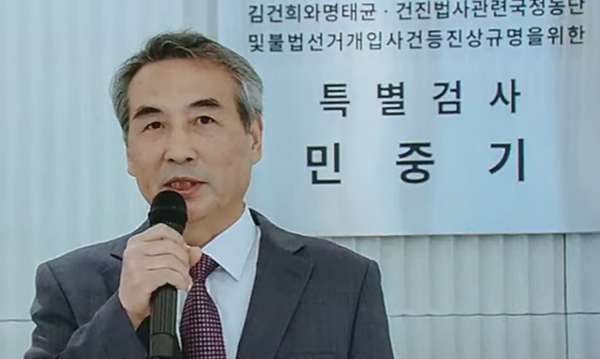
민중기 특검은 '통일교 뇌물 사건'을 국가수사본부에 이첩했다고 밝혔습니다.
뒤늦게 '직무유기 범죄'를 감추기 위한 증거인멸 행위입니다.
직무유기 범행에 대해 특검은 두 가지 변명을 합니다.
첫째, ‘통일교 윤영호 전 본부장의 진술을 믿을 수 없어 사실관계를 확인할 수 없었다.’
둘째, ‘민주당의 통일교 뇌물 수수는 특검 수사대상이 아니다.’
둘 다 새빨간 거짓말입니다.
우선 첫째, 사실관계를 확인할 수 없었다는 변명을 살펴봅시다.
우선 사실관계를 확인하지 않은 것, 그 자체가 직무유기입니다.
권성동 의원에 대해서는 윤 전 본부장의 진술을 듣고 압수수색까지 했습니다.
그런데 민주당 의원들에 대해서는 소환 조사조차 안 했습니다.
그러니 사실관계를 확인할 수 없었던 것입니다.
점쟁이도 아니고서야 수사를 안 하고서 어떻게 사실관계를 확인합니까?
그걸 안 했기에 직무유기인 것입니다.
게다가 그 변명 자체도 거짓말입니다.
특검은 전재수 해수부장관에 대해 '대가관계가 인정된다'면서 국수본에 이첩했습니다.
사실관계가 밝혀지지 않았다는데 어떻게 대가가 인정됩니까? 이것은 특검이 이미 다 알고 있었다는 자백이나 마찬가지입니다.
둘째, 수사대상이 아니라는 변명
이 역시 거짓말입니다.
김건희 특검법 제2조 제1항 제16호에서 ‘이 사건 수사 과정에서 인지된 관련 범죄행위’를 수사 대상으로 삼고 있습니다.
그래서 권성동 의원을 수사하고 구속한 것입니다.
이미 특검은 김건희와는 아무 관련 없는 국토부 서기관의 뇌물 사건도 구속 기소했습니다.
그뿐 아니라 김건희의 집사에 대한 개인 횡령 사건도 기소한 바 있습니다.
특검의 변명에 따르면 이 모두 특검의 수사대상이 아닙니다.
따라서 특검 스스로 권성동 의원이나 국토부 서기관, 집사에 대한 수사와 기소는 불법이라고 시인하는 꼴입니다. 즉, 자기모순입니다.
무엇보다 특검은 특정범죄가중처벌등에 관한법률위반(특수직무유기)죄를 저질렀다고 사실상 자백했습니다.
특검은 전재수 의원 등에 대한 불법정치자금 '공소시효(7년)'가 이달 말에 끝난다는 논란이 일자, 그 책임에서 벗어나기 위해 이렇게 말했습니다.
“전 장관의 경우 금품 수수 시점이 불분명하고 청탁 내용이 구체적이어서 공소시효가 긴 뇌물 혐의(공소 시효 15년)를 적용한 것으로 안다.”
즉, 특검 스스로 이 금품이 정치자금이 아니라 뇌물이라고 인정한 것입니다.
그리고 그 금액도 4천만 원이라고 밝혔습니다.
3천만 원 이상의 뇌물을 받은 경우 형법상 뇌물죄가 아니라 특정범죄가중처벌등에관한법률(이하 특가법) 제2조 제1항 제3호에 따라 특가법이 적용됩니다.
그런데, 특가법 제15조에서는 ‘범죄수사의 직무에 종사하는 공무원이 이 법에 규정된 죄를 범한 사람을 인지하고 그 직무를 유기한 경우에는 1년 이상의 유기징역에 처한다’고 규정하고 있습니다.
즉, 전재수 장관은 수수 금액이 4천만 원이고 대가성이 있는 뇌물이므로 당연히 특가법 위반입니다.
그리고 특가법 위반 한 사람을 인지하고 더 수사하지 않고 4개월 가량 숨기고 있었던 특검은 특가법 제15조 위반에 해당합니다.
특검은 뒤늦게 지난달부터 내사로 분류하고 있었다고 변명하고 있지만 역시 직무유기 성립에는 아무 지장이 없습니다.
특검 주장대로 특검 수사대상이 아니면 즉시 다른 수사기관에 이첩해야 합니다.
보도되자마자 바로 이첩할 수 있는 사건을 왜 그간 숨겼습니까?
권성동 의원은 ‘큰절했다’라는 것까지 까밝히지 않았습니까?
특검은 뇌물 사건이 보도되자마자 바로 국수본으로 이첩했지만 그렇다고 이미 기수에 이른 직무유기죄가 사라지는 것은 아닙니다.
<챗GPT가 작성한 영문기사>
Controversy Over Minister Jeon Jae-soo’s “Political Funds” Statute of Limitations… How Did the Special Prosecutor Change Its Tune?
By Kim Woong, Attorney (former People Power Party lawmaker)
The “People’s Livelihood” special prosecutor announced that it has transferred the “Unification Church bribery case” to the National Police Agency’s National Investigation Headquarters.
This is an act of destroying evidence, carried out belatedly to conceal the crime of dereliction of duty.
Regarding the dereliction of duty, the special prosecutor offers two excuses.
First, “We could not verify the facts because we could not trust the testimony of former Unification Church headquarters chief Yoon Young-ho.”
Second, “The Democratic Party’s receipt of bribes from the Unification Church is not within the scope of the special prosecutor’s investigation.”
Both are outright lies.
Let us first examine the excuse that the facts could not be verified.
Failing to verify the facts itself constitutes dereliction of duty.
In the case of Rep. Kwon Seong-dong, the special prosecutor listened to Yoon’s testimony and even conducted search and seizure.
However, with regard to Democratic Party lawmakers, it did not even conduct summons or questioning.
That is precisely why it could not verify the facts.
One is not a fortune-teller—how can facts be verified without conducting an investigation?
Because it failed to do so, this is dereliction of duty.
Moreover, that excuse itself is a lie.
The special prosecutor transferred the case involving Minister of Oceans and Fisheries Jeon Jae-soo to the National Investigation Headquarters, stating that a “quid-pro-quo relationship is recognized.”
If the facts were not established, how can quid pro quo be recognized?
This is virtually a confession that the special prosecutor already knew everything.
Second, the excuse that it was not within the scope of investigation.
This too is a lie.
Article 2, Paragraph 1, Item 16 of the Kim Keon-hee Special Prosecutor Act stipulates that “related criminal acts recognized in the course of the investigation of this case” are subject to investigation.
That is precisely why Rep. Kwon Seong-dong was investigated and arrested.
The special prosecutor has already arrested and indicted a Ministry of Land, Infrastructure and Transport official on a bribery charge entirely unrelated to Kim Keon-hee.
It has also indicted Kim Keon-hee’s butler for personal embezzlement.
According to the special prosecutor’s own excuse, none of these would fall within its investigative scope.
Thus, the special prosecutor is effectively admitting that its own investigation and prosecution of Rep. Kwon, the MOLIT official, and the butler were illegal—an outright contradiction.
Above all, the special prosecutor has effectively confessed to committing the crime of violation of the Act on the Aggravated Punishment, etc. of Specific Crimes (special dereliction of duty).
As controversy arose that the statute of limitations (seven years) for illegal political funds involving then-Rep. Jeon Jae-soo would expire at the end of this month, the special prosecutor said the following to evade responsibility:
“In the former minister’s case, the timing of the receipt of money is unclear and the details of the solicitation are specific, so we understand that bribery charges—with a longer statute of limitations of 15 years—were applied.”
In other words, the special prosecutor itself acknowledged that the money in question was not political funds but a bribe.
It also stated that the amount was 40 million won.
When a bribe of 30 million won or more is received, the applicable offense is not ordinary bribery under the Criminal Act, but the Act on the Aggravated Punishment, etc. of Specific Crimes (hereinafter, the “Aggravated Punishment Act”), Article 2, Paragraph 1, Item 3.
Article 15 of the Aggravated Punishment Act provides that “when a public official engaged in criminal investigation recognizes a person who has committed a crime prescribed in this Act and abandons his or her duty, he or she shall be punished by imprisonment for at least one year.”
Thus, Minister Jeon Jae-soo received 40 million won in bribes with quid pro quo, which clearly constitutes a violation of the Aggravated Punishment Act.
And the special prosecutor, having recognized this violator and then concealed the matter for about four months without further investigation, falls under a violation of Article 15 of the same Act.
The special prosecutor now claims that it had classified the case as a preliminary inquiry starting last month, but this does nothing to negate the establishment of dereliction of duty.
If, as the special prosecutor claims, the case was outside its investigative scope, it should have immediately transferred it to another investigative agency.
Why was a case that could be transferred immediately upon media reporting concealed for so long?
Did it not even publicize that Rep. Kwon Seong-dong had “made a deep bow”?
The special prosecutor transferred the bribery case to the National Investigation Headquarters as soon as it was reported, but that does not erase the already completed crime of dereliction of duty.
#국가수사본부, #직무유기, #민중기특검
#SpecialProsecutor #PoliticalCorruption #RuleOfLaw
관련기사
- '특별검사' 아닌 ‘특별 브로커’인 그대는 누구?
- 이미 '양평군 면장 죽인' 민중기 특검, 이번에는 또?
- '김건희 공소장'에 자기 비리 관련 주식만 뺀 민중기의 ‘신세계’ 특검
- 법관 출신 민중기 특검의 감춰진 모습?..."신용카드 한 장이면 된다”
- 사퇴한 전재수 장관의 또다른 과거 '돈 의혹'과 '되치기 수법'
- '홀리 마더' 한학자가 키운 '홀리 파티' 민주당
- Controversy Over Minister Jeon Jae-Soo’s “Political Funds” Statute of Limitations… How Did the Special Prosecutor Change Its Tune?
- '로비' 진술 바꾸는 통일교...전문 용어로는 '딜이 성사됐다!'
- 여권과 좌파언론의 전재수 '사석(捨石)작전'?