

이재명 대통령 지지율 높을 때 해치우자
[최보식의언론=김세형 언론인]
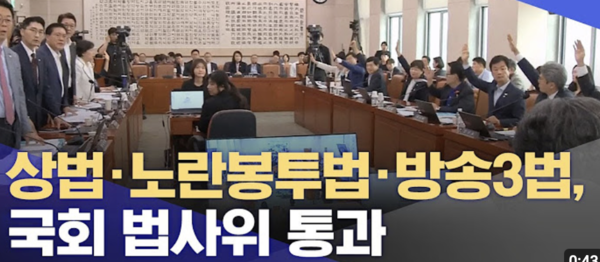
"이재명 대통령 지지율 높을 때 해치우자."
방송3법, 양곡관리법, 상법, 노란봉투법 등등이다.
윤석열 정권 때 국회 의석 190석을 휘두르면서도 尹의 거부권에 걸려 번번히 물거품이 됐던 법적 장치를 전광석화처럼 해치우겠다는 각오가 서슬퍼렇다.
이 법들이 통과될 때 신문에 "이재명 대통령 뜻도 같다"는 표현이 언제나 등장했다. 국힘이 필리버스터까지 동원해 극한 반대했던 KBS 방송법을 통과시킬 때도 그런 뉴스가 지면을 장식했다.
왜 이 법들에 그렇게 집착하는가?
필자는 안토니오 그람시(1891~1937)의 진지론(陣地論)이 떠오른다. 그람시는 2차 대전 이전 유럽의 혼란기에 이탈리아 공산당을 창당해, 무솔리니에게 대단히 위험한 인물로 찍혀 20년형을 언도받고 감옥에서 죽은 인물이다. 그는 자본주의의 붕괴는 필연이라는 마르크스 사상과는 달리, 자본주의는 견고하게 발전해 나갈 것이라고 차원이 다른 공산주의 이론을 전개했다.
그람시는 자본주의가 발전하면 혁명을 단번에 이루기 어려우니 권력을 잡으려면 언론, 시민단체, 농민, 노동계 등 다양한 사회적 진지(방어거점)를 점령해 상대 정치세력을 약화시키는 참호전으로 나가야 한다는 논리를 전개했다.
그리하여 상대 헤게모니를 붕괴시키고 결정적인 시기에 기동전을 펼쳐 사회변혁을 완성한다는 작전이다.
이는 전후 정치헤게모니 싸움에서 권력을 잡으려는 전 세계 좌파 이념가들에게 널리 퍼져 나갔다.
방송 3법을 송두리째 바꿔 국힘의 주장대로 '민주당 방송법'이 돼서 장차 보수당이 정권을 잡더라도 방송사 거버넌스를 좌파 이념 세력이 영구적으로 장악한다면 선거(국회의원, 지자체. 대통령)에서 선전전의 도움을 받아 대단히 유리할 수밖에 없다.
과거 정권은 정권을 잡으면 KBS, MBC, 연합뉴스 등의 사장에게 나가라며 압력을 가하고 그러는 과정에서 독재, 언론자유 파괴 운운하며 손가락질을 많이 받아 정권 지지율 하락을 자초하기도 했다.
그런데 이번 방송법 개정을 보면 민주당은 확실히 보수(국힘)에 비해 뛰어난 권력의 기술자들이다.
KBS 사장을 100명 이상 국민추천위가 추천해 대통령이 임명한다는데 전 세계적으로 100명이 추천하는 시스템을 본 적이 있나, 그 100명이 어떤 사람들로 구성되겠나. 국민에게 방송권한을 돌려준다고?
민간방송인 MBN, TV조선, 채널A, JTBC, YTN까지 뉴스편성위원회 10명을 노사동수로, 즉 노조원 5명, 회사,측 5명이 뉴스편성권을 나눠 가지라는 것은 민노총이 장악하게 두겠다는 것과 무엇이 다른가. 미국·영국·일본에 이런 방송법이 있나.
이번 한미관세 협상에서 30개월 이상 쇠고기, 쌀 등 농산물 2가지 수입을 막느라 3,500억 달러 대미투자를 출혈해야 했다. 한국은 최근 3년간 미국 쇠고기 수출 1위국이다. 그러면서도 얻어 터진 것은 30개월 이상 조항을 괜히 두고 농민들 눈치가 무서워 못 고치는 비겁함 때문이다.
한국은 쌀 생산이 국민소비에 비해 너무 많아 농민들에게 돈을 주더라도 쌀 생산을 줄여야 낭비가 없다.
과거엔 남는 쌀을 북한에 줬다가 지금도 창고에서 3년 지나면 사료로 많이 돌려 쓴다.
아까운 혈세를 줄여 낭비를 줄이려면 쌀 경작 축소, 경제 작물로 전환하는 게 답인데, 민주당은 농민 표를 진지로 쓰려 양곡관리법을 몇 번이고 국회에서 통과시켰다가 거부권 행사로 무산됐다.
이번에 이재명 정권이 탄생하자 기어이 통과시켰다. '그람시 진지론' 때문인지는 모르겠다만.
노란봉투법은 8월 5일 국힘 필리버스터 때문에 시간이 없어 가장 시급한 1번 방송법부터 하고 다음 국회가 열리는 8월 21일에 통과시킬 요량이다. 상법 개정 2탄이랑 함께.
노동자 파업을 쉽게, 불법파업으로 때려 부수어도 배상책임금액도 적게, 하청업체 근로자에 대한 대우는 원청업체도 책임져라! 전 세계 최강의 노동자 보호도 그들의 지지를 영구히 얻으려는 진지다.
상법개정 가운데 집중 투표제는 참여연대, 경실련 같은 시민단체에서 대기업 임원으로 1~2명 트로이 목마를 넣으려는 수작이다.
삼성전자, 현대차 이사회에 듣도보도 못한 '삐딱서니' 사회단체 인간이 한두 명 들어와서 회의를 같이하며 신기술 투자. 해외공장 이전 등등을 함께 논의한다고 생각해보라.
전 세계에서 최초로 시가 총액 4조 달러를 넘어선 앤비디아의 젠슨황 CEO는 GPU투자를 처음 시작한 후, 3년쯤 지나 적자가 누적되자 행동주의 펀드(스타보드 밸류)가 나서 그를 ‘투자 잘못’을 명분 삼아 몰아내려 했다.
GPU가 인공지능 AI시대를 부르고 그것이 인류 문명의 역사를 바꿔 시가 총액이 한국의 GDP 2배를 넘고 독일의 사이즈도 넘어가고 있다.
지금 한국도 GPU 한 장을 5,000만 원에 사지 못 해 발을 동동 구른다.
한국처럼 집중투표제를 해놨으면 젠슨황의 앤비디아는 성공하지 못했을 것이고 CEO자리에서 쫓겨났을 가능성도 있다.
대선 직후 국민이 새정부에 바란다는 갤럽 여론조 사등을 보면 경제활력, 국민통합이 압도적 1, 2위로 60%가 넘었다. 국민염원은 이제 정치권 그만 싸우고 경제 좀 살려내라, 못 살겠다는 거였다.
이재명 정부 출범한 지 약 70일간 민주당이 경제 살리자는 어떤 정책이라도 내놓는 걸 봤나.
이재명 대통령 자신이 어떤 정책이라도 발표한 걸 봤나?
없다. 관심조차 없는 것 같다.
TV뉴스는 하루종일 특검이 윤석열, 김건희를 잡아들인다는 걸로 뒤범적이고 정청래는 민주당 대표가 된 후 '국힘을 해산해버리겠다'는 발언을 가장 많이 한 것 같다.
대통령이 가장 자주 등장하는 장면은 어디 인명사고가 나면 "작업장을 폐기할 방법은 없나? 인간 목숨이 얼마나 중요한데~" 로 포인트를 쌓는다. 경제도 안 살리고 국민통합도 안 해도 지지율이 65%까지 가는 거 보면 우리 국민은 참 마음을 자주 바꾸는가 보다.
민주당이 '그람시의 진지론'에 푹 빠져 다른 것은 눈에 뵈는 게 없는지, 그저 대통령이 인명 피해 공장을 혼내는 데서 카타르시스를 느끼느라 정신줄을 놓고 있는지, 유권자들이 잘 봐야 한다.
무엇보다 개혁의 이름으로 통과시킨 법들이 개악이 아닌지 이성의 이름으로 구분하라.
<챗GPT가 작성한 영문기사>
Is President Lee Jae-myung Entranced by Gramsci’s “War of Position”?
By Se-hyung Kim, Journalist
SEOUL—“Let’s push these through while President Lee’s approval ratings are high.”
That appears to be the guiding mantra behind a flurry of legislative moves: the Broadcasting Act amendments, the Grain Management Act, revisions to the Commercial Act, and the so-called “Yellow Envelope” bill.
During the Yoon Suk-yeol administration, the Democratic Party of Korea wielded its commanding 190-seat majority in the National Assembly but saw many of these initiatives blocked by Mr. Yoon’s repeated vetoes. Now, under President Lee, the party is moving with lightning speed to complete what it could not before—always with news reports noting that “President Lee’s position is aligned.” Even when the conservative People Power Party (PPP) staged filibusters against the broadcasting reforms, the laws passed.
Why this fixation on such laws?
The answer, the author suggests, may lie in the Italian Marxist philosopher Antonio Gramsci’s theory of the “war of position.” Gramsci, who founded the Italian Communist Party during Europe’s interwar turmoil, argued that capitalism was more resilient than classical Marxism assumed. Instead of expecting an inevitable collapse, he envisioned a long-term strategy: capturing key social “positions”—media, civic organizations, unions, and farmers’ groups—to weaken political opponents before launching decisive “maneuver warfare” to transform society.
This approach has resonated with left-wing strategists worldwide. By reshaping the Broadcasting Act to secure left-leaning governance of major networks even if conservatives win future elections, the Democrats could ensure lasting dominance in the information sphere. Under the new system, the KBS president would be chosen from candidates recommended by a 100-member public panel—a structure unprecedented globally and, critics say, easily tilted toward partisan sympathizers.
Other changes extend to private broadcasters, giving labor unions equal control with management over news programming decisions. Detractors liken this to granting the powerful Korean Confederation of Trade Unions de facto editorial authority—a model unseen in the U.S., U.K., or Japan.
The same logic appears in the Grain Management Act. South Korea produces more rice than its citizens consume, and surplus often ends up as animal feed. Economists have long urged reducing cultivation and shifting to higher-value crops. Yet the Democrats, seeking farmers’ loyalty as a political “position,” repeatedly passed expansionary grain subsidies, overriding presidential vetoes after President Lee took office.
The “Yellow Envelope” bill, designed to lower corporate liability for damages from illegal strikes and extend protections to subcontracted workers, is next in line—another solidified base of support among organized labor.
Even the proposed Commercial Act reforms, particularly the cumulative voting provision, are controversial. Business leaders warn this could allow activist civic groups to place disruptive “Trojan horse” directors inside corporate boards, potentially derailing strategic decisions. The author points to Nvidia’s history: CEO Jensen Huang once faced ouster by an activist fund during a period of losses, before leading the company to become the world’s first to surpass a $4 trillion market capitalization—twice the size of South Korea’s GDP.
What has been missing, the author argues, is attention to the public’s foremost demands. Polls taken after the presidential election showed “reviving the economy” and “national unity” as the top priorities, each scoring above 60 percent. Yet in the roughly 70 days since President Lee’s inauguration, the administration has announced no major economic policy, while political energy has been consumed by prosecutorial investigations into former president Yoon and his wife, and by party leaders promising to “dissolve” the opposition.
President Lee’s most visible appearances have been at disaster sites, chastising unsafe worksites and invoking the value of human life. His approval rating remains at 65 percent—a testament, perhaps, to the Korean electorate’s shifting moods.
But voters, the author warns, should examine whether these legislative victories are genuine reforms or “deforms” disguised as progress. And they should ask whether the Lee government is so immersed in its Gramscian “war of position” that it is blind to everything else.
#이재명대통령 #그람시진지론 #방송3법 #양곡관리법 #노란봉투법 #상법개정
#LeeJaeMyung #Gramsci #WarOfPosition #SouthKoreaPolitics #BroadcastingAct #GrainManagementAct #YellowEnvelopeBill #CommercialAct #MediaReform #PoliticalStrategy #KoreanDemocracy #LabourPolitics #AgriculturalPolicy #EconomicPolicy #NationalUnity #PoliticalReform
관련기사
- 민주당 '가짜 경제학'의 귀환!... 정규재의 직격
- 한국 증권시장의 비밀 중 하나는 '호남 인맥'?
- 일본과 같은 '15%' 관세율일까?...겉으로는 숫자가 맞춰졌다
- 코스피 5000, 이재명 정부에서 가능할까
- 뭣이 중한디?...'3%룰' 상법 개정안이 몰고올 폭풍
- 李대통령의 ‘목조르기' 극약 처방... 건설업 고용은?
- '정청래 리스크' 때문에 李대통령의 조국 사면 ... 정치판 뒷얘기
- 이름의 반전?...하필 밝은 기분을 주는 '노란봉투법' 일까
- 세상에 없는 이재명式 유토피아!...40년 경력 언론인의 직격
- '엔비디아 창업자' 젠슨 황의 APEC 연설 전문!...‘AI는 일하고 인간은~'
- 왜 좌파는 정권을 잃어도 흔들리지 않는가