

The most dangerous thing right now is uncertainty.
[Choice Times=Jeong-Gi Kim, Secretary General of the World Smart Sustainable Cities Organization]
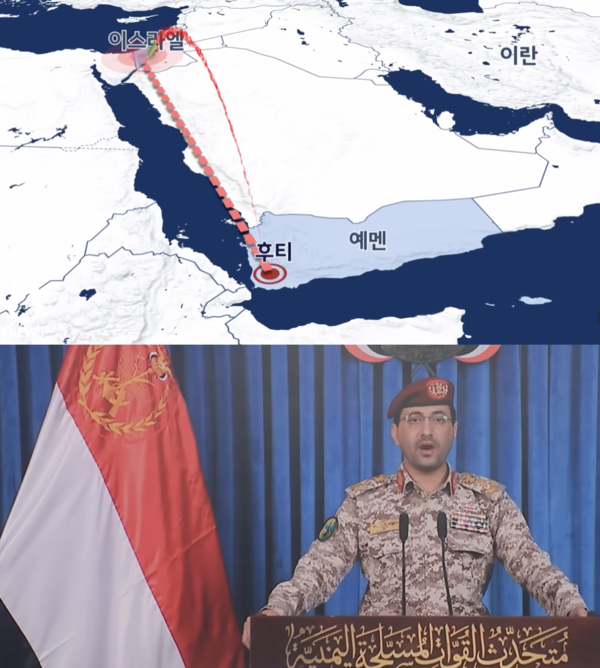
With the full-scale entry of Yemen’s Houthi rebels, the Middle East front is rapidly expanding. As Ansar Allah recently launched ballistic missile attacks against Israel and openly declared coordination with Hezbollah and pro-Iran militias, the so-called “Axis of Resistance”has entered a phase of simultaneous activation.
The Strait of Hormuz, leading toward the Arabian Sea, is already under near-blockade levels of tension, and now even the Bab el-Mandeb Strait in the Red Sea is under threat. The moment these two maritime arteries are shaken at the same time, the entire global energy system could begin to crack.
International oil prices can no longer be explained simply by supply and demand. Markets do not calculate numbers. They price in fear. Oil at $150 a barrel is not an exaggeration; it is a realistic threshold that can be reached at any time if the conditions align. The problem is not the price itself, but the structure in which prices enter an uncontrollable phase.
The essence of this crisis is not oil output, buttransport uncertainty. The Houthis do not need to completely shut down a strait. A single successful strike is enough. In that instant, insurance stops, and shipping routes stop. Modern war no longer works through occupation, but through the design of risk. This is not a military blockade; it is an economic blockade.
There is precedent. After Houthi attacks continued from 2023 onward, global shipping companies abandoned the Red Sea route and detoured around the Cape of Good Hope. The strait remained physically open, but the market treated it as closed. That is the essence of asymmetric warfare: hitting a few vessels in order to stop the entire flow. That is precisely the mechanism now operating in the Middle East.
This shock will widen in stages. At first come rising freight costs and route diversions. Next, the insurance market is shaken, and the routes themselves become paralyzed. Then, if the crisis enters a higher-intensity phase, Iran’s direct involvement and the northern front combine, and the entire Middle East becomes integrated into a single battlefield. At that point, the energy problem spills over into a financial and industrial crisis. What is unfolding now is a war in which the gunfire cannot yet be heard.
The problem is South Korea. In a structure highly dependent on Middle Eastern crude, this shock will not end as a simple rise in costs. The exchange rate shakes first, import prices follow, and consumption and investment contract at the same time. Companies cannot bear the costs, and the market prices that in first. The won and the stock market have already issued their warning.
This is only the beginning, not the peak. The government has entered into initial responses, including fuel tax cuts, adjustments to oil price ceilings, bond buybacks, market stabilization measures, and consideration of using strategic reserves. But considering the expansion of the Middle East front and the possibility of prolonged supply disruption, this level of response is not enough. It is now time to shift to a wartime-style economic management system.
Under the current circumstances, I proposeseven countermeasuresthat President Lee Jae-myung should implement immediately.
First, energy emergency response must be elevated to a 24-hour system.
The core issue is not the oil price itself, but the persistence of supply disruption. The government should keep a joint emergency response center operating around the clock and inspect inventories of crude oil, LNG, and petroleum products on a daily basis. The government has already begun using jointly stored crude and adjusting power-generation fuel operations, but this must be transformed from a short-term measure into a wartime-style supply management system. In particular, it is necessary to disclose scenario-based response tables premised on the possibility that both Hormuz and Bab el-Mandeb could be shaken at once.
Second, strategic petroleum release and diversification of import sources must be pursued simultaneously.
Strategic reserves are an immediate-acting medicine that can stabilize market psychology, but in a long war, new procurement lines matter more. The government’s mention of using 20 million barrels of jointly held reserves can serve as an initial breakwater, but if the structure itself — heavily dependent on Qatari gas and Middle Eastern crude — remains unchanged, the shock will recur. Alternative procurement lines in the United States, West Africa, Southeast Asia, and Australia must be expanded, and the flexibility clauses in long-term LNG contracts must be reviewed again.
Third, exchange-rate defense must be bundled into one package combining monetary, fiscal, and market measures.
The recent slide of the won to 1,517.3 per dollar reflects not just psychological deterioration, but a market judgment that Korea is vulnerable to an energy shock. Therefore, intervention by the foreign exchange authorities alone is insufficient. Liquidity provision to the bond market, inspections of FX liquidity, expansion of dollar funding channels if necessary, and management of financial institutions’ exposures must all move together as one package. It is true that the government has already launched 5 trillion won in bond buybacks and market stabilization measures, but right now the important message is that it will do more, if more is needed.
Fourth, support for ordinary people must be narrow and thick, not broad and shallow.
Fuel tax cuts and price caps have a tangible effect, but if prolonged they increase fiscal burdens and create distortions. Therefore, rather than broad universal support, it is more efficient to focus assistance on groups directly exposed to the energy spike: transport workers, small self-employed businesses, fisheries, agriculture and livestock sectors, and low-income households facing heating or transport costs. The OECD has also warned that this war-driven energy shock could cut growth and raise inflation. Fiscal policy must therefore be used not for general stimulus, but for precisely targeted shock absorption.
Fifth, industry-by-industry emergency manuals must be activated immediately.
Korea is not simply a country of oil refining. It is a manufacturing and export economy in which semiconductors, chemicals, steel, shipping, aviation, and automobiles are all interconnected. A surge in oil prices does not mean merely higher fuel costs; it triggers a chain reaction of higher electricity costs, logistics costs, raw material costs, and insurance premiums.
Accordingly, the Ministry of Trade, Industry and Energy and each industry association must immediately inspect action plans that include transportation volumes, alternate route 확보, inventory stockpiling, emergency changes in import lines, and the extent to which costs can be passed on into prices. The reason the Korean stock market reacted so sharply to the war shock is that the market reflected this structural vulnerability first.
Sixth, the message of coordination with the Bank of Korea must be made clearer.
A Middle East war shock is a classic supply shock, and it cannot be solved by interest rates alone. But markets are most sensitive to mismatched messages of the sort: “the government worries about inflation while the central bank cares only about growth.” The Bank of Korea has already explained that the inflation path is heavily influenced by international oil prices and exchange rates, and the government also recognizes oil spikes as a risk to the economy as a whole. Therefore, instead of prematurely locking in a direction for interest rates, there needs to be a joint message that inflation, exchange rates, and financial stability will be managed together.
Seventh, the president himself must explain the situation directly to the public.
The most dangerous thing right now is uncertainty. If the possibility of renewed Houthi disruption in the Red Sea, a prolonged de facto blockade of the Strait of Hormuz, a $150 oil scenario, a weaker won, and rising inflation all overlap at once, both the markets and the public will react anxiously.
At such a moment, if the government explains the situation with numbers and plans, anxiety will diminish. If it repeats only abstract statements, the markets will shake even more violently. The strongest stabilizing measure may be for President Lee Jae-myung himself to step forward and explain in concrete terms the current level of reserves, supply plans, support for vulnerable groups, and the tools available to stabilize financial markets. In fact, the government’s recent measures were also announced through emergency meetings chaired by the president.
The conclusion is simple. What is needed now is not observation, but decision. Partial responses — such as shaving a little off the fuel tax or releasing a bit of market stabilization funding — are not enough. Energy, exchange rates, bonds, stocks, inflation, and industry must all be seen together and moved together.
The market has already issued its warning through the won and share prices, and experts believe this war could bring both slower growth and higher inflation at the same time. If the government does not move faster and more precisely now, the shock is likely to spread beyond the exchange rate and into the real economy. The government must now respond with speed and precision.
#MiddleEastCrisis #OilPriceShock #EnergySecurity