

It is often said that a true friend helps in times of difficulty
[Choice Times=Kim Jin-an, Former Head of Samsung Electronics’ Middle East & Africa Division]
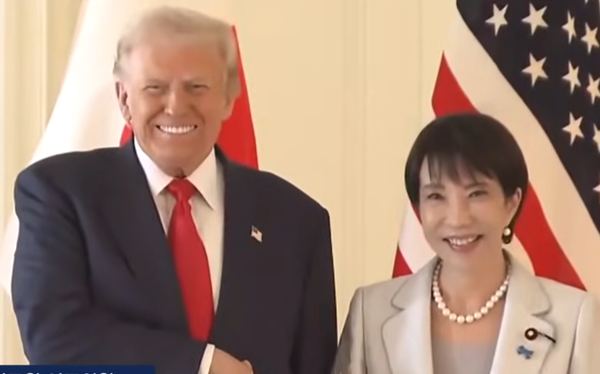
U.S. President Donald Trump’s request that South Korea deploy naval vessels to protect oil shipments passing through the Strait of Hormuz—oil that South Korea itself uses—is entirely reasonable.
Some critics argue that “it is regrettable for an ally to demand only its own interests in the name of alliance,” calling it “a troop deployment request lacking even minimal respect for allied nations.” Others protest that since the United States carried out the attack on Iran, it is now asking others to clean up the aftermath. However, regardless of how the situation began, Iran’s blockade of the Strait of Hormuz is severely damaging South Korea’s national interests. Can we simply stand by while our oil tankers are attacked by another country?
I believe the cautious stance currently taken by the government and ruling party is extremely cowardly. Some within the ruling camp claim this would amount to joining someone else’s war, but there is no need to go as far as invoking the Korea–U.S. alliance.
How can deploying naval vessels to protect our own tankers be interpreted as “entering a war”? If soaring oil prices destabilize the national economy and we cannot even protect our own ships, then what is the purpose of having a military? This is not about attacking Iran, but about exercising the right of self-defense to protect South Korean vessels if they come under attack.
Isn’t the Cheonghae Unit, currently operating in the Gulf of Aden, also deployed to ensure the safety of South Korean ships and to maintain international maritime security against Somali pirates? In fact, in 2011, the Cheonghae Unit’s destroyer ROKS Choi Young successfully rescued the hijacked South Korean vessel Samho Jewelry through the “Operation Dawn of the Gulf of Aden.”
Are we to say that Somalia was easy enough to send troops to because they were pirates, but Iran is too powerful and therefore frightening? Frankly, from a cost-benefit perspective, deploying naval forces to the Strait of Hormuz is far more advantageous at the national level.
It is often said that a true friend helps in times of difficulty. If South Korea extends a helping hand while President Trump is being sidelined by NATO and isolated even within the United States, how grateful would he be?
Once the Iran issue subsides, tariff negotiations with the United States will soon resume. There are also pending matters such as investment in the U.S. and burden-sharing for U.S. Forces Korea, negotiations that have not even begun. If President Trump feels indebted to President Lee Jae-myung this time, he will surely repay it with an even greater return.
No matter how one looks at it, deploying naval forces is a profitable move. Sending the ROKS Daejoyeong, currently in the Gulf of Aden, would be sufficient—and if the situation appears too dangerous, simply demonstrating presence near the Strait without entering it could still have significant impact.
Some argue that such deployment could result in South Korean ships being sunk by Iranian missiles, but that is the kind of claim made by those who do not understand international politics. If such a situation were to occur, it would mark the beginning of a true nightmare for Iran.
South Korea is a global military power with stronger capabilities than Israel. It is also a missile power, possessing thousands of missiles accumulated over decades in underground storage facilities. What would happen if South Korea, enraged by an Iranian attack, were to send hundreds of missiles to Israel? The Iranian military is well aware of this possibility.
When Chinese criminal organizations in Cambodia targeted South Koreans with scam operations, President Lee Jae-myung once posted in Khmer, “Touch a Korean and you will be ruined. Do you think this is an empty threat?”—a message that instilled a sense of pride among South Koreans. I hope the president will show that same resolve once again.
There is concern that the government may miss the right timing by merely watching neighboring countries. If we are ultimately required to support President Trump due to the Korea–U.S. alliance, it would be a better strategy to step forward first and take the initiative. If we delay further, we will end up helping anyway—while receiving criticism for it.
#SouthKorea #USAlliance #StraitOfHormuz