

대기업은 무한대의 화수분인가?
[최보식의언론=이병태 카이스트 명예교수]
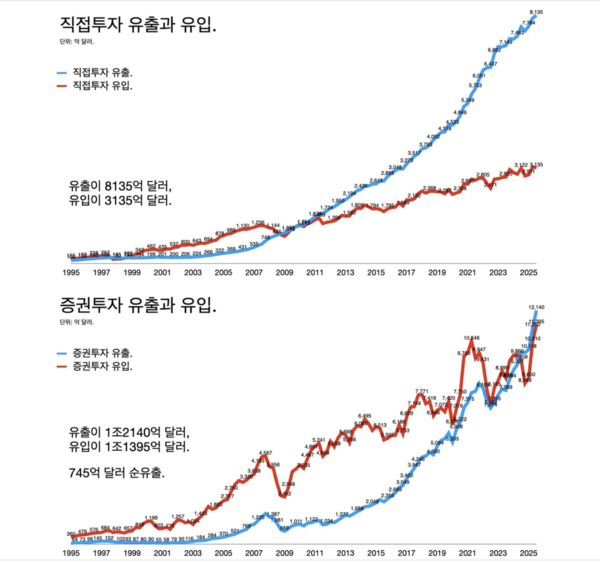
수출이 잘 되고 무역 수지가 크게 흑자인데도 원화는 약세를 못 벗어나는 가장 큰 이유는 기업들이 달러를 벌어와도 원화로 바꾸지 못하는 데 있다.
해와 투자를 많이 해야 하기에 달러를 갖고 있는 것이 환위험에서 안전하다. '서학개미'들의 글러벌 증시 투자의 급증도 한 몫한다.
그 결과는 수입 물가의 급등으로 다시 한국이 인플레이션 위험에 노출되기 시작했다. 현재도 내년에도 경제 성장를 능가하는 인플레이션이 진행된다. 다시 말해 실질 임금(소득)의 감소가 예상된다.
대통령이 모이라고 하니 재벌들이 앞으로 5년 내에 1,000조 원이 넘는 국내 투자를 발표한다. 역대 정권에서 해온 짓이다. 아무도 이런 약속의 이행 여부를 따져보지 않는다. 따져서 쓸 데도 없다. 이 말을 믿는 사람들이 누가 있을까? 대통령실은 믿을까?
미국에 1,000조가 넘는 돈을 투자하고, 국내에도 그 보다 더 큰 투자를 한다고 발표한다. 대기업은 무한대의 화수분인가?
이미 국내보다는 해외에 투자를 더 많이 하는 현상이 지속된 지는 15년 가량이 넘었고 국내외 투자 금액의 차이는 기하급수적으로 확대되고 있다. 과거 데이타가 말해주는 진실은 최근 대기업의 천문학적 금액의 투자계획은 믿거나 말거나가 아니라 믿으면 안 되는 정치적으로 강요된 이야기라는 것이다.
기업이 국내에 투자를 하려면 투자해서 돈 벌 기회가 확대되었다는 믿음을 주어야 한다. 도대체 정부가 기업이 국내에 투자해서 돈 벌 기회가 확대되는 조치를 취한 게 무엇인가? 노란봉투법, 상법 개정안, 자사자 강제 매각 시도, 중대 재해 처벌법 강조 등등 기업 경영에 도움되는 조처가 하나라도 있는가?
아마도 이번 정부가 한 일 중에 한미 관세협의 종결이 그나마 경영의 불확실성과 자동차 관세 인하라는 긍정적 효과가 있는 일이라고 생각할 수 있는 유일한 것이다. 하지만 이 협상은 앞으로 천문학적인 투자를 미국에 한다는 약속이 달려 있다.
한국이 기업하기에는 너무 고비용에 위험한 나라가 되어 있다는 사실과 트럼프노믹스의 결합으로 기업의 해외 투자는 급증하고 있고 국내 제조업 공동화는 가속되고 있고, 좋은 일자리는 줄어들고 있다. 그것이 원화 약세의 진짜 이유이고 이를 시정할 아무런 계획이나 아젠다가 제시된 것이 없다.
약한 원화에서 오는 인플레이션 공습은 이제 시작이다. 이재명 정부가 곧 경제 시험대에 오를 것이다.
<챗GPT가 작성한 영문기사>
Why Is the Korean Won Falling Like Autumn Leaves Despite a Trade Surplus? The Real Reason
By Byung-Tae Lee, Professor Emeritus, KAIST
Despite strong exports and a large trade surplus, the Korean won continues to weaken.
The biggest reason is that Korean corporations—even when they earn dollars—cannot convert them into won.
They must hold dollars because massive overseas investments are necessary, and doing so protects them from exchange-rate risks. The surge in “Seohak Ants”—Korean individual investors buying global stocks—also plays a significant role.
The result is soaring import prices, pushing Korea back into inflation risk. Both this year and next, inflation is expected to outpace economic growth. In other words, real wages (and real income) are likely to fall.
Conglomerates have announced over 1,000 trillion won in domestic investment over the next five years—simply because the president called them together. This ritual has been repeated by every administration. No one actually verifies whether these promises are fulfilled. In fact, there is no meaningful way to verify them.
Who truly believes these announcements? Does the presidential office believe them?
They say they will invest over 1,000 trillion won in the United Statesandeven more domestically. Are Korean conglomerates magic fountains of infinite capital?
For more than 15 years now, Korean companies have consistently invested more overseas than at home, and the gap between domestic and foreign investment has widened exponentially. Historical data makes one truth clear: these astronomical domestic investment pledges are not merely questionable—theyshould notbe believed. They are politically compelled statements, not genuine business decisions.
If the government wants companies to invest domestically, it must convince them that opportunities for profit have expanded. But what policy has the government enacted that expands opportunities for companies to make money in Korea?
The Yellow Envelope Act, the amendments to the Commercial Act, the push for forced treasury-share sales, the emphasis on stricter industrial-accident criminal liability—what among these helps business operations?
Perhaps the only thing the current administration has done that could reduce uncertainty for corporations is completing the U.S.–Korea tariff negotiations, which may lower auto tariffs. But that agreement comes with strings attached: a commitment to astronomical investment in the United States.
Korea has become a high-cost, high-risk environment for doing business. Combined with “Trumponomics,” this is driving an explosion in overseas investment, accelerating the hollowing-out of domestic manufacturing, and shrinking high-quality jobs.
This is the real reason for the weak won.
And yet, no plan or agenda has been proposed to address it.
The inflation shock triggered by a weak currency has only just begun.
The Lee Jae-myung administration will soon face its first major economic test.
#경제시험대 #해외투자공장화 #원화약세의진실 #환율
#KoreanWonWeakness #GlobalInvestmentShift #InflationRiskAhead
관련기사
- 'IMF 악몽' 소환하는 달러 환율... 국민연금까지 동원?
- 폴란드 망명정부의 지폐냐? ... 공항 환전소 환율 1,800원대로
- 환율 1,500원 무너질까... 2주 연속 ‘블랙 프라이데이’
- 비상! 미친 환율...'떨어진 낙엽'이 되고 있는 원화, 왜 이런 일?
- 이재명 정권이 원화를 '휴지조각' 만들고 있다...1470원 환율
- 이태원에 달러 환전하러 갔더니...계엄 상황이 끝났는데도 왜?
- Why Is the Korean Won Falling Like Autumn Leaves Despite a Trade Surplus? The Real Reason
- "환율 폭등으로 국민 재산 7% 날렸다"는 계엄 때 이재명 발언, 지금은?
- 달러 환율을 '비상계엄' 수준으로 되돌렸다!…정부의 위험한 도박
- '서학개미'는 죄가 없다! ... 환율 폭등의 진짜 원인?
- 5년 8개월 만에 최대 낙폭한 이재명 정부의 이것은?
- 이재명 정부의 경제 수장들 모여 '환율 잡겠다'고 내린 조치?
- 환율 1500원대 돌파!...왜 유독 원화 가치만 브레이크 파열됐나