

아마 쇼케이스, 전시행정의 대표적 연구 사례로 남을 것
[최보식의언론=박묘숙 기자]
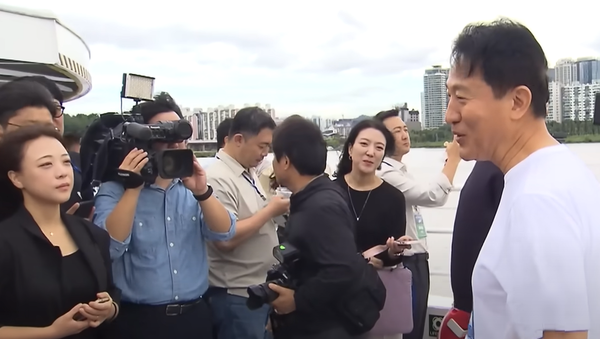
이명박 전 서울시장이 청계천으로 대통령 자리에 오른 것처럼, 오세훈 서울시장은 '한강'으로 뭔가 해보려는 야심을 갖고 있었던 것 같다.
하지만 욕심은 큰데 오세훈의 머리나 능력은 이명박을 전혀 따라가지 못한 걸까.
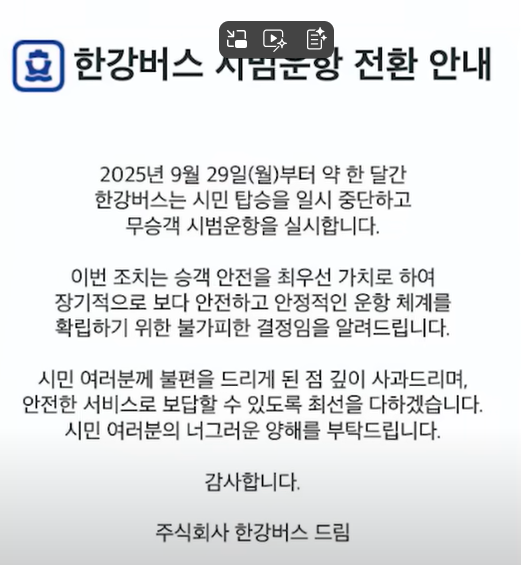
오세훈 시장의 야심작 '한강버스'가 개통 10일만에 운행을 중단했다. 서울시는 안전 점검을 위해 29일부터 약 한 달간 무승객 시험운항 체제로 전환한다고 발표했다.
막대한 시민 세금이 들어갔고 신세계를 연 것처럼 선전해대던 사업이 개시되자마자 연일 많은 일들이 터져 열흘만에 손을 든 적은 없었다. 아마 쇼케이스, 전시행정의 대표적 연구 사례로 남을 것이다.
한강버스는 개통날(9월 18일) 비가 와서 행사를 못했고, 사흘째 날에는 팔당댐 방류로 운항이 중단된다고 했을 때부터 심상찮았다.
'출퇴근용'이라는 한강버스가 큰비가 오거나 바람이 세게 불고, 안개가 끼고, 눈이 내리고, 얼음이 얼면 운항할 수 없다는 사실을 일깨워줬다.
그러면 '유람선'이지, 우리가 생각하는 '대중교통 버스'가 아닌 것이다. 금세 들통날 거짓말, '출퇴근용 버스'라고 자랑했던 오 시장은 자신의 입을 원망했을 것이다.
이틀 뒤 22일 저녁 7시 10분, 한강버스는 방향타 신호 이상으로 강 한복판에서 약 20분간 정지했다. 승객들은 뚝섬 접안에서 하선해야 했다.
같은 날 20분 뒤인 저녁 7시 30분 한강버스는 잠실선착장에서 출항 직전에 전기기계통(배터리·발전기) 이상으로 결항했다. 버스(?)에 탑승해있던 승객들은 모두 내렸다. 26일에는 또 운항 중 방향타 고장이 발생했다.
서울시가 이런 '한강버스' 운항에 투입한 예산은 약 926억 원(일설에서는 1500억 원 추정)이었다. 선박 제작비, 인프라 정비, 선착장 설치, 운영 준비, 기타 초기 투자비용(안전설비, 선박 시스템, 선착장 접근성 개선 등)으로 쓰였겠지만, 구체적인 내역은 아직 공개되지 않았다.
'한강버스'는 접근성이나 속도 등에서 상식적으로 출퇴근 대중교통이 될 수없다. 관광 혹은 유람용이다.
그럼에도 서울시는 마치 출퇴근할 수 있는 것처럼 선전해 '대중교통'으로 분류했고, 운송업체에 적자 날 경우 세금으로 보전받을 수 있는 '버스' 자격의 혜택을 줬다.
서울 버스의 경우 준공영제로 운영된다. 수입금이 지출비용보다 낮으면 서울시가 이를 보전해 준다.
현재 서울 버스의 1인당 수송원가가 1,440원이다. 환승 할인 등으로 인해 평균 운임은 938원(65%)이다. 이에 서울시는 1인당 수송비를 502원 보전해주는 구조다. 서울시는 2021년 4,561억 원, 2002년 8,114억 원, 2023년 8,915억 원, 2024년 3,200억 원을 버스업체에 재정지원금으로 투입했다.
시내를 달리는 대중버스가 이렇다면, 한강버스의 적자 보전폭은 훨씬 더 클 것이다.
한강버스는 한 달에 6~7만 원만 내면, 서울시 대중교통을 무제한 탑승할 수 있는 정기권 '기후동행카드'에도 포함되었다. 한강버스 1회 이용요금인 3,000원에 2,000원을 더한 5,000원을 기후동행카드(대중교통 전용 6만2,000원)에 추가 지불하면, 한달 내내 한강버스를 무제한 탈 수 있다.
한강버스의 연간 운영비는 대략 200억 원인데, 탑승 수익은 50억 원 정도로 추정된다.
서울시가 왜 이런 한강버스를 '대중교통'으로 분류했는지, 한강에서 이런 운송사업을 해보겠다는 민간업체가 없어서 유인책으로 그런 것인지 그 배경이 정확하게 밝혀지지 않았다. 이 때문에 '특혜설'이 나온 것이다.
게다가 서울시는 선박 제작 경험이 없는 신생업체를 선정해 한강버스 6척에 대한 제작을 맡겼다. 민주당 백승아 의원에 따르면 이 업체는 기본적인 용접 장비뿐 아니라 배를 만들 공장도 갖추지 못했다고 한다.
서울시는 이 업체에 200억 원이 넘는 제작 경비를 선지급해줬다. 하지만 계약 후 1년 여간 한 척의 배도 납품 못해 당초 운항 개통일이 이로인해 지연됐다는 것이다.
한달 여 뒤 한강버스 운항이 설령 재개된다고 해도 위의 문제는 그대로 남아있다.
한강버스 사업은 오 시장이 지난 2023년 영국 런던 출장 당시 템스강의 ‘리버버스’를 탑승한 뒤 나온 것이라고 알려졌다. 오 시장의 ‘그레이트 한강 프로젝트’의 간판 사업으로 꼽혔다.
하지만 내년 지방선거를 앞두고 오 시장이 제 무덤을 판 것 같다.
<챗GPT가 작성한 영문기사>
Greedy but Not Even Close to Lee Myung-bak’s Abilities… Oh Se-hoon’s “Han River Bus” Halted After Just 10 Days
By Bosik Choi, Publisher
Former Seoul Mayor Lee Myung-bak rode the Cheonggyecheon restoration project all the way to the presidency. Current Mayor Oh Se-hoon, it seems, harbored similar ambitions with the Han River.
But while his ambitions may have been big, did Oh’s intellect and capability fall far short of Lee’s? His much-touted “Han River Bus” service was suspended just ten days after its launch. On September 29, the Seoul Metropolitan Government announced that it would switch the service to a one-month “trial run without passengers” for safety checks.
A project that devoured taxpayer money and was hyped as if it opened up a whole new world collapsed within ten days amid a string of accidents. It is likely to go down as a classic case study in showcase-style, exhibitionist administration.
The problems began from day one. The opening ceremony on September 18 was rained out. By the third day, operations were halted again due to Paldang Dam’s water discharge. That was the first warning sign: a so-called “commuter bus” that could not operate in heavy rain, strong winds, fog, snow, or ice. That makes it not public transit, but a glorified sightseeing cruise. Oh’s boasts about a “commuting bus” quickly rang hollow.
On September 22, the Han River Bus stalled for 20 minutes mid-river due to a rudder signal failure, forcing passengers to disembark at Ttukseom. Minutes later, another vessel was canceled at Jamsil Pier after a power system malfunction. On September 26, another rudder failure occurred.
The city has poured roughly ₩92.6 billion ($67 million) into the project, though some estimate as high as ₩150 billion. Costs included vessel construction, infrastructure upgrades, pier installations, safety systems, and accessibility improvements—though exact details remain undisclosed.
Fundamentally, the Han River Bus is unsuitable as public transit due to its poor accessibility and speed. Yet the city classified it as “public transportation,” granting it taxpayer subsidies under Seoul’s quasi-public bus system. In 2023 alone, Seoul injected over ₩890 billion into subsidizing bus operators, covering deficits when fares fall short of costs. For the Han River Bus, the shortfall will be even greater.
Under Seoul’s new “Climate Companion Card”—a commuter pass allowing unlimited public transit for ₩62,000 a month—the Han River Bus was also included. Riders could pay just ₩5,000 extra for unlimited access to the river bus, despite its high per-ride fare of ₩3,000. Annual operating costs are estimated at ₩20 billion, with projected revenues of only ₩5 billion.
The project selection has also drawn controversy. The city awarded vessel construction to a startup with no prior shipbuilding experience and no shipyard. The firm reportedly received over ₩20 billion in advance payments yet failed to deliver even one boat on time, delaying the launch by over a year.
Even if operations resume after safety checks, the underlying problems remain.
The project reportedly originated after Oh Se-hoon visited London in 2023 and rode the Thames River “River Bus.” He then branded the Han River Bus as a centerpiece of his “Great Han River Project.” But with next year’s local elections looming, critics say he may have dug his own political grave.
#리버버스, #그레이트한강
#HanRiverBus #SeoulPolitics #PublicTransitFailure