

[Choice Times=Bo-Sik Choi, Publisher]
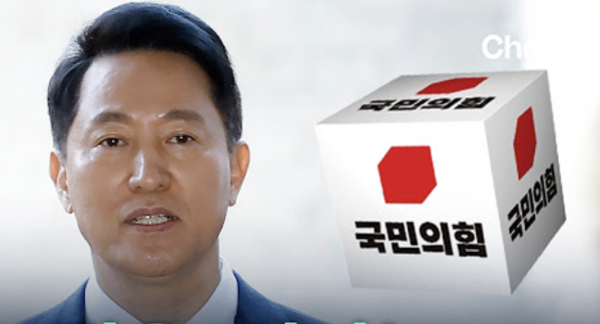
Does the People Power Party really have to taste it to know whether something is “shit or soybean paste”?
Seoul Mayor Oh Se-hoon did not submit his application documents by the March 8 deadline for preliminary candidate registration.
Oh is not someone who entered politics yesterday. Why would he run in an election he clearly cannot win? Even without the leadership of Jang Dong-hyuk, his chances of winning this time were already slim. Oh has been branded an “incompetent mayor,” symbolized by the controversial Han River bus project. He was even trailing by double digits in polls against a Democratic Party district head who was largely unknown to the general public. There is little more to discuss.
In effect, party leader Jang Dong-hyuk handed Oh Se-hoon an excuse for an “exit.”
Instead of registering as a preliminary candidate for Seoul mayor, Oh posted a message on his social media titled “A Final Appeal.” He wrote,“With a desperate heart, I will continue to wait for change within the party. I make a final appeal to Chairman Jang Dong-hyuk and fellow lawmakers. Even if candidate registration is postponed, I hope the party’s lawmakers can gather in one place first and hold a fierce, all-night debate.”
With this move, Oh has secured a path to re-enter national politics not as an election loser but as a political figure returning to the central stage.
Na Kyung-won and Rep. Shin Dong-wook, whose names had also circulated in Yeouido as possible Seoul mayoral candidates, declared they would not run. No matter how ambitious one may be, even a gamble requires some reasonable odds.
Still, the failure of heavyweight candidates to register has triggered an “emergency” within the People Power Party. Late that night, the party leadership notified lawmakers of an “emergency general meeting” scheduled for the following day (March 9). The agenda: to debate the party’s direction, including whether to sever ties with former President Yoon Suk-yeol ahead of the local elections.
It is somewhat absurd that, on the eve of an election, the party is once again debating what to do about Yoon Suk-yeol, whose outdated declaration of martial law pushed conservatives into a political abyss. And even if the party were to pivot toward a full break with Yoon, what would really change? Would the public suddenly exclaim, “Our People Power Party has changed!” with wide-open eyes? Or would they simply see it as the foolish behavior of people who must literally “taste it to know whether it’s shit or soybean paste”?
Why was severing ties with Yoon Suk-yeol such a difficult puzzle that it required tasting the difference between excrement and fermented paste?
If the People Power Party truly wants to stage a convincing public performance, the centerpiece should not be a mere debate about breaking with Yoon. Instead, it should involve the resignation of the Jang Dong-hyuk leadership system. Only then could Jang theatrically step down “for the greater good.”
As I have written several times before, with Jang Dong-hyuk as its face, even if the party claimed to turn soybeans into fermented paste, few people would believe it. In politics, the messenger matters more than the message. When such a widely unpopular figure dominates the party, who would want to support or defend it?
Without Jang’s exit, whether the party breaks with Yoon or stages an even grander “break-with-Yoon show,” the election result will likely be the same.
As I wrote yesterday, the only political gamble the party might still attempt involves the cards of Park Geun-hye and Lee Jun-seok.
Meanwhile, the People Power Party received 38 applications for metropolitan governor and mayoral nominations.
For Seoul mayor, three candidates applied: former lawmaker Yoon Hee-sook, Lee Sang-gyu (the party’s Seongbuk-eul district chairman), and Lee Seung-hyun, CEO of Infac Korea.
For Gyeonggi governor, two candidates applied: Supreme Council member Yang Hyang-ja and former Korea Expressway Corporation president Ham Jin-kyu. Jo Gwang-han, another Supreme Council member and former mayor of Guri, is expected to apply if the party extends the registration deadline.
In Busan, incumbent mayor Park Heong-joon and Rep. Joo Jin-woo applied.
In Incheon, only incumbent mayor Yoo Jeong-bok applied.
In Daejeon, incumbent mayor Lee Jang-woo was the sole applicant.
In contrast, nine candidates applied for Daegu mayor, including lawmakers Yoo Young-ha, Yoon Jae-ok, Joo Ho-young, Choi Eun-seok, and Choo Kyung-ho, along with former officials and politicians.
Six candidates applied for North Gyeongsang governor, including incumbent governor Lee Cheol-woo and former deputy prime minister Choi Kyung-hwan.
In Ulsan, incumbent mayor Kim Doo-gyeom and former lawmaker Park Maeng-woo applied.
In Sejong, incumbent mayor Choi Min-ho applied.
For Gangwon governor, incumbent Kim Jin-tae, former lawmaker Yeom Dong-yeol, and Ahn Jae-yoon applied.
Four candidates applied for North Chungcheong governor, including incumbent governor Kim Young-hwan and former police commissioner Yoon Hee-geun.
In North Jeolla, former independent parliamentary candidate Kim Gwang-jong applied.
In South Gyeongsang, incumbent governor Park Wan-soo and former lawmaker Cho Hae-jin applied.
In Jeju, former Korea Asset Management Corporation president Moon Sung-yu applied.
Meanwhile, South Chungcheong governor Kim Tae-heum, who had been weighing a re-election bid, did not submit his application.
No candidates applied for South Jeolla governor or Gwangju mayor.
The party’s nomination committee announced that interviews for candidates will be held from March 10 to 12. However, because of Oh Se-hoon’s failure to register, there remains a possibility the party may extend the application deadline—though nomination committee chairman Lee Jung-hyun has insisted there will be no extension.
#SeoulMayorRace #SouthKoreanPolitics #PeoplePowerParty