

A Blunt Warning from a Former Samsung Executive
[Choice Times=Jin-An Kim, Former Executive Vice President for the Middle East and Africa Region at Samsung Electronics]
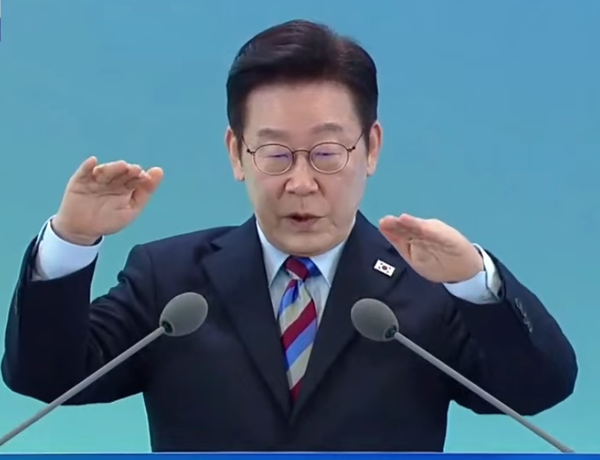
Lee Jae-myung on the 6th once again raised the issue of soaring housing prices in the Seoul metropolitan area at a town hall meeting titled “Listening to the Hearts of Gyeongnam,” held at the Changwon Convention Center in South Gyeongsang Province.
“Does it make any sense that an apartment costs 300 million won per pyeong?” the president asked. “Here, an entire apartment costs 300 million won.”
By his reckoning, a 20-pyeong apartment in a prime Gangnam district would cost 5 to 6 billion won, while a similar unit in Gyeongnam would cost around 300 million won—what he described as a nation-ruining phenomenon. Personally, I too find it hard to accept that a single apartment in Gangnam can cost 8 or even 10 billion won. But I am a private citizen; the president is not. A president must be far more careful with his words.
In a capitalist society, however, what can be done if wealthy individuals are willing to pay even 10 billion won to live in a particular neighborhood? I myself once lived in an apartment in Apgujeong-dong, Gangnam. The complex was cramped and old, transportation was inconvenient, parking was a nightmare, and it was hardly a pleasant place to live.
Compared with where I now live in Jamsil, the living conditions in Apgujeong-dong were inferior in every respect. And yet people continue to crowd into Apgujeong-dong, paying exorbitant prices to live there. What can anyone do about that? The same is true of Daechi-dong. I may not understand it, but there must be reasons why people want to live in Apgujeong-dong or Daechi-dong.
The president framed his remarks as a warning of national ruin by comparing housing prices in prime Gangnam districts with those in Gyeongnam. But the very choice of comparison was misguided. In using provocative and inappropriate examples to justify his argument, he appeared to be stirring emotions and inciting the public rather than offering a sober analysis.
Consider the United States. In Austin, Texas, the median price of a residential apartment is about $500,000. In Manhattan, New York, the average condo price is around $3 million, with a median of roughly $1.7 million. Apartments along the Hudson River—comparable to Apgujeong-dong—can cost about $5 million. Although the price gap between Austin and Manhattan is nearly tenfold, no one in the United States finds this strange. In fact, people would find it odd to compare Austin’s housing prices with those of Manhattan.
There are reasons why apartments in Manhattan or along the Hudson River are so expensive, and those who live there are people who can afford it—an extremely small group, such as high earners on Wall Street. The same logic applies to Apgujeong-dong and Daechi-dong in Seoul. It makes little sense to shape nationwide housing policy around this small wealthy elite. Doing so risks producing targeted policies driven by jealousy or resentment toward the rich.
I understand the frustration of a president and government tasked with reining in runaway housing prices. But approaching the problem emotionally—by comparing prime districts in Seoul with provincial housing markets—leads to a flawed diagnosis from the outset. And a flawed diagnosis inevitably produces misguided solutions. That is how we end up with policies that irrationally suppress multi-homeowners through taxation in the name of stabilizing prices.
As many experts have pointed out, eliminating multi-homeowners does not bring housing prices down. On the contrary, when the number of multi-homeowners declines, supply in the rental market shrinks, pushing up lease and monthly rent prices. This, in turn, fuels speculative demand and drives housing prices even higher. This is a policy failure that has repeated itself under past left-leaning administrations.
I have repeatedly criticized the president’s careless language. Extreme and provocative expressions such as “300 million won per pyeong” or “300 million won per apartment” may be suitable as slogans chanted by protesters at rallies, but they are not words a president should use. Supporters may cheer and applaud such remarks, but they risk steering the country in the wrong direction. A president should serve as the final arbiter behind the scenes, not as a front-line agitator shouting slogans.
This pattern has appeared not only in housing but also in exchange-rate issues. Because the president consistently places himself at the forefront, cabinet ministers and senior officials fade from view. The president seems eager to play the role of a modern-day Midas, a sage possessing all the world’s wisdom—seeking to involve himself in and dominate every political, social, and economic issue. As during the Yoon Suk-yeol administration, the system of checks and balances by aides and ministers is no longer functioning.
The same was true in the Coupang controversy. Whenever the president makes unrefined remarks or verbal missteps, everyone around him scrambles merely to defend those mistakes. If this situation—one in which the president is effectively unchecked—continues, President Lee Jae-myung may ultimately find himself walking the same path as former President Yoon Suk-yeol.
#LeeJaeMyung #HousingPolicy #PresidentialRhetoric