

친구들에게, 내 마음과 영혼이 그들과 함께 있다는 걸 전하고 싶었을 뿐”
[최보식의언론=박묘숙 기자]
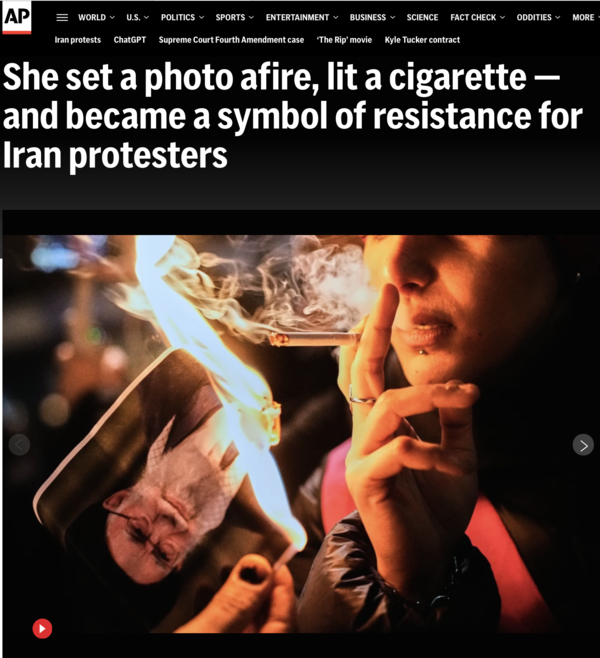
이란 반정부 시위를 촉발한 ‘담배 미녀’는 캐나다에 망명 중인 20대 반체제 인사라고 AP통신 등 외신이 전했다. 이란의 최고 지도자 하메네이의 사진을 라이터로 불 붙인 뒤 그 불로 담배를 피우는 영상의 주인공이다.
그녀는 캐나다 토론에서 지난 7일 ‘담배 미녀’로 알려지게 된 그 영상을 촬영했다고 한다. 이란 정권이 거의 전면적인 인터넷 차단을 시행하기 하루 전날이었다.
그녀는 “그저 친구들에게, 내 마음과 영혼이 그들과 함께 있다는 걸 전하고 싶었을 뿐”이라고 인도의 CNN 계열사 CNN-News18과 인터뷰에서 말했다.
SNS를 통해 빠르게 확산된 이 영상은 악압적 정권에 맞선 개인의 저항과 서사를 상징하는 이란 반정부 시위의 대표적인 이미지로 자리 잡았다.
AP통신은 16일 자 ‘She set a photo afire, lit a cigarette - and became a symbol of resistance for Iran protesters’(그녀는 사진에 불을 붙였고, 담배를 붙였다 — 그리고 이란 시위대의 저항 상징이 되었다)라는 제목의 기사에서 이 여성에 대한 최소한의 정보를 공개했다.
그녀는 X에서 자신을 ‘급진적 페미니스트’라고 소개하며, 영화 ‘아담스 패밀리’의 기괴하지만 생기 넘치는 여주인공에서 따온 ‘모티시아 애덤스’라는 계정을 사용한다고 AP는 밝혔다.
그녀는 비영리 매체 ‘더 오브젝티브’와의 인터뷰에서 해당 계정에 대해 “단지 ‘기괴한 것들(spooky things)’에 대한 관심 때문”이라고 설명했다.
그녀는 지금까지 안전상의 이유로 본명을 공개하지 않고 있다. 그녀는 이란에서 반체제 인사로 활동하다 체포와 학대를 겪었고, 이후 터키를 거쳐 캐나다에 들어왔다. 터키에서 캐나다 학생 비자를 얻었고, 현재 20대 중반인 그녀는 토론토에서 난민 자격으로 지내고 있다.
그녀는 2019년 ‘피의 11월’ 시위 당시, 당시 17세로 처음 체포됐다. 이 시위는 트럼프 대통령이 이란 핵합의에서 미국을 탈퇴시킨 뒤 제재가 강화되며 촉발된 사건이었다.
그녀는 더 오브젝티브와의 인터뷰에서 “저는 이슬람 정권에 강하게 반대했다”며 “보안군은 테이저와 곤봉으로 저를 체포했고, 가족도 제가 어디에 있는지 모르는 상태로 구금시설에서 하룻밤을 보냈다”고 말했다.
당시 가족은 보석금으로 급여 명세서를 제출해 석방을 받아냈다. 그리고 그녀는 그때부터 감시 대상이 됐다.
2022년 마흐사 아미니 사망 이후 시위 때는 '의무적 히잡'에 반대하는 유튜브 프로그램에 참여했고, 차단된 번호로 협박 전화를 받기 시작했던 이력도 있다.
2024년 이란 대통령 에브라힘 라이시가 헬기 추락 사고로 사망한 뒤 자신의 이야기를 공유했다가, 이스파한의 자택에서 체포되기도 했다.
그녀는 심문을 받으며 “심각한 모욕과 신체적 학대”를 당했고, 이후 터무니없이 높은 보석금으로 풀려났다. 결국 그녀는 터키로 도피해 캐나다로 향하는 여정을 선택했고, 이번에 세계적 주목을 받게 됐다.
그녀는 지난 13일 한 인터뷰에서 “제 가족은 모두 아직 이란에 있고, 며칠째 연락이 닿지 않는다”며 “이슬람 정권이 그들을 해칠까 봐 정말 걱정된다”고 말했다.
*다음은 AP통신의 ‘She set a photo afire, lit a cigarette - and became a symbol of resistance for Iran protesters’ 전문이다.
담배 한 모금을 피워 올리는 그 순간, 캐나다에 있던 한 여성은 이란의 유혈 진압에 맞서는 세계적 저항의 상징이 되었고, 전 세계는 그 불꽃을 보았다.
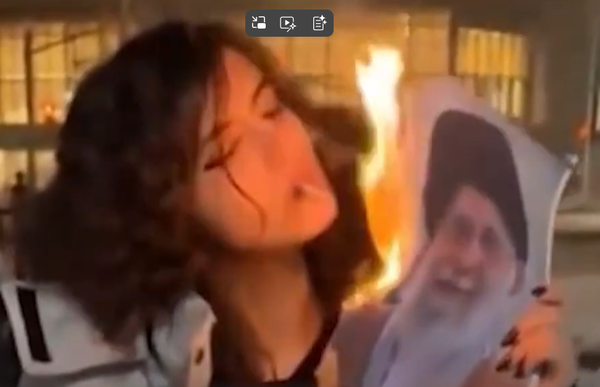
최근 며칠 사이 바이럴이 된 한 영상에는, 자신을 이란 출신 난민이라고 소개한 여성이 라이터를 켜 손에 들고 있던 사진에 불을 붙이는 장면이 담겨 있다. 불길은 이란 최고 성직자인 아야톨라 알리 하메네이의 얼굴을 밝힌다. 이어 여성은 그 불빛에 담배를 가져가 잠시 빨아들인 뒤, 남은 이미지를 인도 위로 떨어뜨린다.
연출된 장면인지, 즉흥적인 저항 행위인지는 — 논쟁이 많지만 — 분명치 않다. 그러나 이 영상은 이란의 병든 경제와 이슬람 공화국에 항의하는 시위의 대표적 이미지 가운데 하나가 되었고, 동시에 도널드 트럼프 미국 대통령이 다시 이란에 대한 군사 행동을 검토하는 시점과 맞물렸다.
이 제스처는 가상 공간을 넘어 현실 세계로 확산됐다. 이스라엘에서 독일, 스위스, 미국에 이르기까지 정권 반대자들이 아야톨라의 사진에 담배 불을 붙이는 장면이 이어졌다.
34초 분량의 이 영상에서, X(옛 트위터), 인스타그램, 레딧 같은 플랫폼의 수많은 이용자들은 한 개인이 신정 체제의 법과 규범을 연속적으로 거부하는 매혹적인 자율성의 행위를 목격했다. 그녀는 히잡을 쓰지 않았다. 이는 정권의 의무적 머릿수건에 반대했던 ‘여성·생명·자유’ 시위가 벌어진 지 3년이 지난 시점이다.
그녀는 이란 최고지도자의 이미지를 불태운다. 이는 이슬람 공화국에서 사형까지 가능한 범죄다. 곱슬머리는 흘러내린다 — 이 역시 이란 정부의 눈에는 또 하나의 위반이다. 그녀는 불길로 담배를 붙인다 — 이란에서 단정치 못한 행위로 여겨지는 제스처다.
그리고 수백만 번 공유·증폭된 그 몇 초 동안, 그녀는 역사 속으로 들어간다.
서사를 둘러싼 전쟁
2026년, 소셜미디어는 분쟁의 서사를 장악하기 위한 핵심 전장이 되었다. 이란의 시위대는 이번 불안을 정권의 억압과 무능에 대한 항의라고 말한다. 반면 이란은 오랫동안 이를 미국과 이스라엘 같은 외부 세력이 이슬람 공화국을 불안정하게 만들려는 음모로 규정해 왔다.
이란 국영 매체는 당국이 ‘테러리스트’라고 부르는 이들을 겨냥한 대규모 체포 소식을 연이어 전하고 있으며, 영상과 이미지를 외부로 보내는 거의 유일한 수단인 스타링크 위성 인터넷 접시를 찾고 있는 정황도 포착된다. 활동가들에 따르면 당국의 유혈 진압으로 최소 2,615명이 숨졌고, 이는 수십 년간 어떤 시위나 소요보다도 큰 사망자 수로, 1979년 이슬람 혁명의 혼란을 떠올리게 한다. 목요일 기준으로는 진압이 어느 정도 반대 움직임을 잠재운 정황도 있었다.
소셜미디어에는 이란 지도자의 사진으로 담배를 붙이는 사진들이 넘쳐났다. 미국 몬태나주 공화당 상원의원 팀 시히는 “있으면 피워라. #이란”이라는 글을 올렸다.
AI, 허위정보, 조작정보의 시대에는 감정적·정치적으로 충전된 이미지에 의문을 제기할 충분한 이유가 있다. 그래서 이번 달 ‘담배 소녀’가 등장하자 많은 이용자들이 의심했다.
예컨대 그녀가 이란 안에서 불을 붙인 것인지, 표현의 자유가 보장된 장소에서 연대의 표시로 한 것인지는 즉각 분명하지 않았다. 배경이 캐나다로 보인다는 지적이 있었고, 그녀는 인터뷰에서 이를 확인했다. 그러나 옷깃 선이 맞는지, 불꽃이 현실적인지, 실제 여성이 머리를 그렇게 불에 가까이 둘 수 있는지 등의 질문이 이어졌다.
일부는 ‘담배 소녀’가 심리전(psyops)의 사례인지 묻는다. 이것 역시 분명치 않다. 심리전은 인류 분쟁만큼 오래된 전쟁과 국정의 한 요소로, 결과에 이해관계를 가진 누군가가 이미지나 소리를 의도적으로 유포하는 행위다. 제2차 세계대전 당시 연합군의 가짜 라디오 방송에서 냉전기의 핵미사일 퍼레이드까지, 역사는 사례로 가득하다.
미 육군도 이를 숨기지 않는다. 노스캐롤라이나 포트 브래그의 제4심리작전단은 지난해 ‘Ghost in the Machine 2’라는 모집 영상을 공개했는데, ‘PSYWAR’에 대한 언급이 곳곳에 담겨 있다. 가자 전쟁에서도 치열한 시각전이 벌어졌다. 하마스는 석방 전 이스라엘 인질들에게 공개적으로 웃고 포즈를 취하게 했고, 이스라엘은 가족과 재회하는 환희의 장면을 방송했다.
어떤 해석이 맞든, 이란 여성의 행위가 지닌 상징성은 소셜미디어를 타고 전 세계로 퍼질 만큼 강력했고, 현실의 시위 현장에서 모방을 불러일으켰다.
이미지 뒤의 여성
이 여성은 자신의 신원을 확인하려는 AP통신의 여러 차례 시도에 응답하지 않았다. 다만 다른 매체와의 인터뷰에는 응했고, AP는 그 인터뷰들의 진위를 확인했다.
X에서 그녀는 자신을 ‘급진적 페미니스트’라고 소개하며, ‘아담스 패밀리’의 기괴하지만 생기 넘치는 여주인공에서 따온 ‘모티시아 애덤스’라는 계정을 사용한다. 비영리 매체 ‘더 오브젝티브’와의 인터뷰에서 그녀는 단지 ‘기괴한 것들(spooky things)’에 대한 관심 때문이라고 말했다.
그녀는 안전상의 이유로 본명을 공개하지 않는다. 그녀는 이란에서 반체제 인사로 활동하다 체포와 학대를 겪었고, 이후 터키를 거쳐 캐나다로 온 험난한 여정을 설명했다. 터키에서 캐나다 학생 비자를 얻었고, 현재 20대 중반으로 토론토에 살며 난민 지위를 가지고 있다고 밝혔다.
바로 그곳에서, 1월 7일, 그녀는 ‘담배 소녀’로 알려지게 된 영상을 촬영했다. 이는 이란 정권이 거의 전면적인 인터넷 차단을 시행하기 하루 전이었다.
“그저 친구들에게, 내 마음과 영혼이 그들과 함께 있다는 걸 전하고 싶었을 뿐이에요.” 그녀는 인도의 CNN 계열사 CNN-News18과의 인터뷰에서 이렇게 말했다.
그녀는 2019년 ‘피의 11월’ 시위 당시, 17세에 처음 체포됐다고 말했다. 이는 트럼프 대통령이 이란 핵합의에서 미국을 탈퇴시킨 뒤 제재가 강화되며 촉발된 시위였다.
“저는 이슬람 정권에 강하게 반대했습니다.” 그녀는 더 오브젝티브에 말했다. 보안군은 “테이저와 곤봉으로 저를 체포했고, 가족도 제가 어디에 있는지 모르는 상태로 구금시설에서 하룻밤을 보냈다”고 했다. 가족은 보석금으로 급여 명세서를 제출해 석방을 받아냈다. “그때부터 저는 감시 대상이 됐어요.”
2022년 마흐사 아미니 사망 이후 시위 때에는 의무적 히잡에 반대하는 유튜브 프로그램에 참여했고, 차단된 번호로 협박 전화를 받기 시작했다고 말했다. 2024년 이란 대통령 에브라힘 라이시가 헬기 추락 사고로 사망한 뒤 자신의 이야기를 공유했다가, 이스파한의 자택에서 체포됐다고 한다.
그녀는 심문을 받으며 “심각한 모욕과 신체적 학대”를 당했다고 말했다. 이후 이유 없이 높은 보석금으로 풀려났고, 터키로 도피해 캐나다로 향하는 여정을 시작했으며, 결국 세계적 주목을 받게 됐다.
“제 가족은 모두 아직 이란에 있고, 며칠째 연락이 닿지 않습니다.” 화요일 공개된 인터뷰에서 그녀는 말했다. “이슬람 정권이 그들을 해칠까 봐 정말 걱정됩니다.”
<기사 원문>
LONDON (AP) - With one puff of a cigarette, a woman in Canada became a global symbol of defiance against Iran's bloody crackdown on dissent - and the world saw the flame.
A video that has gone viral in recent days shows the woman - who described herself as an Iranian refugee - snapping open a lighter and setting the flame to a photo she holds. It ignites, illuminating the visage of Ayatollah Ali Khamenei, Iran's highest cleric. Then the woman dips a cigarette into the glow, takes a quick drag - and lets what remains of the image fall to the pavement.
Whether staged or a spontaneous act of defiance - and there's plenty of debate - the video has become one of the defining images of the protests in Iran against the Islamic Republic's ailing economy, as U.S. President Donald Trump considers military action in the country again.
The gesture has jumped from the virtual world to the real one, with opponents of the regime lighting cigarettes on photos of the ayatollah from Israel to Germany and Switzerland to the United States.
In the 34 seconds of footage, many across platforms like X, Instagram and Reddit saw one person defy a series of the theocracy's laws and norms in a riveting act of autonomy. She wears no hijab, three years after the "Women, Life, Freedom" protests against the regime's required headscarves.
She burns an image of Iran's supreme leader, a crime in the Islamic republic punishable by death. Her curly hair cascades - yet another transgression in the Iranian government's eyes. She lights a cigarette from the flame - a gesture considered immodest in Iran.
And in those few seconds, circulated and amplified a million times over, she steps into history.
A battle for narrative control
In 2026, social media is a central battleground for narrative control over conflicts. Protesters in Iran say the unrest is a demonstration against the regime's strictures and competence. Iran has long cast it as a plot by outsiders like United States and Israel to destabilize the Islamic Republic.
Iranian state media announces wave after wave of arrests by authorities, targeting those it calls "terrorists" and also apparently looking for Starlink satellite internet dishes, the only way to get videos and images out to the internet. There was evidence on Thursday that the regime's bloody crackdown had somewhat smothered the dissent after activists said it had killed at least 2,615 people. That figure dwarfs the death toll from any other round of protest or unrest in Iran in decades and recalls the mayhem of the country's 1979 Islamic Revolution.
Social media has bloomed with photos of people lighting cigarettes from photos of Iran's leader. "Smoke 'em if you got 'em. #Iran," posted Republican U.S. Sen. Tim Sheehy of Montana.
In the age of AI, misinformation and disinformation, there's abundant reason to question emotionally and politically charged images. So when "the cigarette girl" appeared online this month, plenty of users did just that.
It wasn't immediately clear, for example, whether she was lighting up inside Iran or somewhere with free-speech protections as a sign of solidarity. Some spotted a background that seemed to be in Canada. She confirmed that in interviews. But did her collar line up correctly? Was the flame realistic? Would a real woman let her hair get so close to the fire?
Many wondered: Is the "cigarette girl" an example of "psyops?" That, too, is unclear. That's a feature of warfare and statecraft as old as human conflict, in which an image or sound is deliberately disseminated by someone with a stake in the outcome. From the allies' fake radio broadcasts during World War II to the Cold War's nuclear missile parades, history is rich with examples.
The U.S. Army doesn't even hide it. The 4th Psychological Operations Group out of Ft. Bragg in North Carolina last year released a recruitment video called, "Ghost in the Machine 2 that's peppered with references to "PSYWAR." And the Gaza war featured a ferocious battle of optics: Hamas forced Israeli hostages to publicly smile and pose before being released, and Israel broadcast their jubilant reunions with family and friends.
Whatever the answer, the symbolism of the Iranian woman's act was powerful enough to rocket around the world on social media - and inspire people at real-life protests to copy it.
The woman behind the imagery
The woman did not respond to multiple efforts by The Associated Press to confirm her identity. But she has spoken to other outlets, and AP confirmed the authenticity of those interviews.
On X, she calls herself a "radical feminist" and uses the screen name Morticia Addams -- after the exuberantly creepy matriarch of "The Addams Family" - sheerly out of her interest in "spooky things," the woman said in an interview with the nonprofit outlet The Objective.
She doesn't allow her real name to be published for safety reasons after what she describes as a harrowing journey from being a dissident in Iran - where she says she was arrested and abused - to safety in Turkey. There, she told The Objective, she obtained a student visa for Canada. Now, in her mid-20s, she said she has refugee status in and lives in Toronto.
It was there, on Jan. 7, that she filmed what's become known as "the cigarette girl" video a day before the Iranian regime imposed a near-total internet blackout.
"I just wanted to tell my friends that my heart, my soul was with them," she said in an interview on CNN-News18, a network affiliate in India.
In the interviews, the woman said she was arrested for the first time at 17 during the "bloody November" protests of 2019, demonstrations that erupted after Trump pulled the U.S. out of the nuclear deal that Iran had struck with world powers that imposed crushing sanctions.
"I was strongly opposed to the Islamic regime," she told The Objective. Security forces "arrested me with tasers and batons. I spent a night in a detention center without my family knowing where I was or what had happened to me." Her family eventually secured her release by offering a pay slip for bail. "I was under surveillance from that moment on."
In 2022 during the protests after the death of Mahsa Amini in custody, she said she participated in a YouTube program opposing the mandatory hijab and began receiving calls from blocked numbers threatening her. In 2024, after Iranian President Ebrahim Raisi died in a helicopter crash, she shared her story about it - and was arrested in her home in Isfahan.
The woman said she was questioned and "subjected to severe humiliation and physical abuse." Then without explanation, she was released on a high bail. She fled to Turkey and began her journey to Canada and, eventually, global notoriety.
"All my family members are still in Iran, and I haven't heard from them in a few days," she said in the interview, published Tuesday. "I'm truly worried that the Islamic regime might attack them."
#이란반정부시위 #담배소녀 #하메네이