

아마도 내년 6월 지방선거를 앞둔 득표 전략
[최보식의언론=박수영 국민의힘 의원]
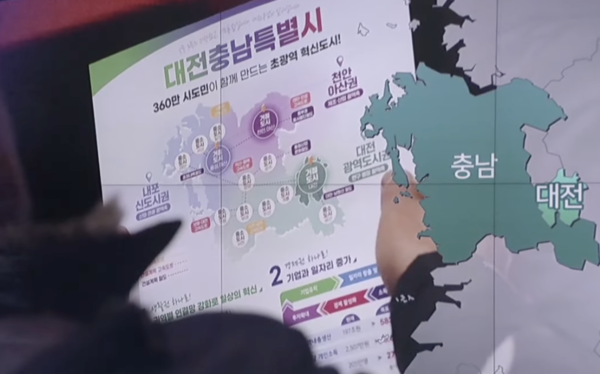
이재명 대통령이 대전과 충남을 통합하겠다는 뜻을 밝혔다고 한다. 아마도 내년 6월 지방선거를 앞두고, 노무현 대통령이 세종시 이전 이슈로 총선에서 승리한 뒤 "재미 좀 봤다"라고 얘기한 걸 따라 하려는 듯 하다. 이걸 건의한 참모가 한심하다. 세종시와는 전혀 다른 문제이기 때문이다.
(1) 주민 반발이 많을 것...
통합특별법이야 다수당인 여당이 속전속결로 통과시킬 수 있겠지만, 통합에 반대하는 지역 민심이 만만치 않을 것이다. 대전과 충남을 합치는 경우, 대전이든 충남이든 아니면 둘 다든 이름이 없어져야 되는데, 지역명이라고 하는 것은 깊은 역사성을 갖고 있기 때문에 주민 반발이 크게 마련이다.
어떤 사람이 대대로 충남 보령 출신인데 갑자기 대전 보령 출신이 되면 쉽게 받아들일 수 있을까? 또는 대전광역시민이라는 자부심 가진 분이 갑자기 충청남도 대전(일반시) 노은1동 주민이 되면 기뻐할까?
(2) 수도권 과밀을 해결한다고?
대전 충남 통합이 수도권 과밀을 해소하는 방안이라고 주장하는데, 통합 대전 충남이 없어서 수도권이 과밀된 게 아니라는 팩트를 모른다. 수도권 과밀은 교육, 직장, 문화 등이 수도권에 몰려 있어서 생기는 현상이기에 대전 충남의 물리적 통합으로 해결될 일이 아니다.
(3) 물리적 통합이 아니라 인프라부터 깔아야...
법적으로 또는 물리적으로 통합한다고 통합되는 게 아니다. 대전 충남 충북을 연결하는 인프라가 깔려야 통합이 된다.
부울경 메가시티를 외친 지 10년이 넘었지만 아직까지 안 되고 있는 이유가 뭔지 살펴봐야 한다. 부산에서 진주가 2시간 이상 걸리는 이상 메가시티는 허구의 공상소설일 뿐이다.
암튼 이재명 대통령이 제기한 이 이슈는 득보다 실이 많은 이슈가 될 것이라고 본다. 과거 이명박 대통령 시절인 2010년 여러 개의 시군통합을 시도했다가 마산, 창원, 진해를 창원시로 통합한 것 이외에는 주민 반발로 실패해 정치적으로 큰 낭패를 본 사례가 있다.
<챗GPT가 작성한 영문기사>
President Lee’s Daejeon–South Chungcheong Merger Card… Do You Think He’ll Get Any “Fun” Out of It?
By Soo-Young Park, Lawmaker of the People Power Party
It is being reported that President Lee Jae-myung has expressed his intention to merge Daejeon and South Chungcheong Province. With the local elections scheduled for next June, this appears to be an attempt to imitate former President Roh Moo-hyun, who, after winning a general election on the Sejong City relocation issue, remarked that he had “gotten some fun out of it.” The aide who proposed this idea deserves criticism. This is an entirely different issue from Sejong City.
(1) Strong resident opposition is likely…
The ruling party, as the majority party, may be able to push through a special merger law at lightning speed, but local public sentiment opposing the merger will not be easy to overcome. If Daejeon and South Chungcheong are merged, whether it is Daejeon, South Chungcheong, or both, a regional name would have to disappear. Regional names carry deep historical meaning, so strong resistance from residents is inevitable.
Would someone whose family has lived for generations in Boryeong, South Chungcheong, easily accept suddenly becoming a resident of “Daejeon Boryeong”? Or would citizens proud of being residents of Daejeon Metropolitan City be happy to suddenly become residents of “Daejeon, South Chungcheong Province (a general city), Noeun 1-dong”?
(2) Does this solve overcrowding in the Seoul metropolitan area?
It is claimed that merging Daejeon and South Chungcheong would help resolve overcrowding in the capital region, but this ignores a basic fact. The capital region is not overcrowded because Daejeon and South Chungcheong are separate. Overcrowding occurs because education, jobs, and culture are concentrated in the capital region. It is not something that can be resolved through the physical merger of Daejeon and South Chungcheong.
(3) Infrastructure must come first, not physical integration…
Legal or physical integration does not automatically produce real integration. Integration requires infrastructure linking Daejeon, South Chungcheong, and North Chungcheong.
More than ten years have passed since calls for a Busan–Ulsan–Gyeongnam (BU·UL·GYEONG) megacity began, yet it has still not materialized. One should consider why. As long as it takes more than two hours to travel from Busan to Jinju, a megacity remains nothing more than fictional fantasy.
In any case, I believe this issue raised by President Lee Jae-myung will bring more losses than gains. There is a precedent: during the Lee Myung-bak administration in 2010, multiple city and county mergers were attempted. Aside from the merger of Masan, Changwon, and Jinhae into Changwon City, the efforts failed due to resident opposition, resulting in significant political setbacks.
#메가시티착각 #선거용정책논란 #대전충남통합
#RegionalMerger #LocalBacklash #PoliticalRisk