

Korea stands at a tipping point between survival and decline
[Choice Times=Se-Hyung Kim, BeteranJournalist]
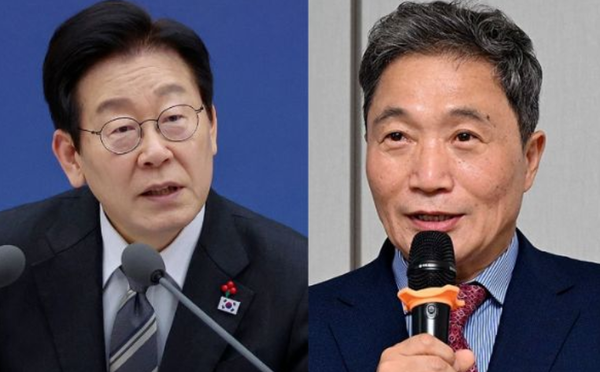
When President Lee Jae-myung decided to begin receiving the 2026 New Year policy briefings on December 11 and, for the first time, broadcast them live on television, many citizens likely found the move refreshing, as it seemed intended to create a working atmosphere within the public service and to explain state affairs to the public in detail.
I thought the president might also be confident enough to raise the level of attention generated by the live broadcasts in order to drown out the noise surrounding issues such as judicial reform. He may also have believed it would help lift his slightly declining approval ratings. If so, that could, in turn, be advantageous as the political mood shifts rapidly toward local elections in the new year. As a seasoned political operator, he may well have had deeper calculations that ordinary people cannot easily discern.
However, over the weekend, the nation and the political world were thrown into turmoil over President Lee’s manner of speaking during the live broadcasts of the policy briefings. Questions were raised about the purity and intent of the live format itself.
Among the remarks that the People Power Party and other political actors took issue with were references to the so-called “Hwan-pppa (Hwandan-gogi believer) controversy,” comments such as “Your remarks are quite lengthy,” and “When does your term end?”—among many others.
During the policy briefing by Park Ji-hyang, chair of the Northeast Asian History Foundation, President Lee abruptly raised a provocative question without preamble: “These days, there’s something called the ‘Hwan-pppa controversy,’ isn’t there?”
Park Ji-hyang and those around her all looked visibly startled.
“What does that mean…?”
President Lee, seemingly enjoying the atmosphere, did not raise the question in order to boast inwardly—thinking “You didn’t know this, did you?”—or to show off superior intellectual prowess even in the field of history. Still, Park faltered. President Lee pressed further, asking whether Hwandan-gogi was not a historical document and how its historical value should be assessed.
The live broadcast may have backfired. Reform Party leader Lee Jun-seok pointed out that Hwandan-gogi is not an official historical record but a forgery cobbled together by Yi Yu-rip, and the controversy escalated to the point of asking whether Harry Potter should also be considered a history book. The People Power Party joined the fray en masse.
During the policy briefing by Lee Hak-jae, president of Incheon International Airport Corporation, President Lee sharply asked, “Is it true that people can illegally take cash out by slipping $100 bills into a book as a bookmark?”
Lee Hak-jae, a former three-term lawmaker from the People Power Party who was appointed under the Yoon Suk-yeol administration, failed to provide a proper answer. As he awkwardly struggled to respond, President Lee scolded him, saying, “Your answer is far too long. Why do you keep going off on tangents?”
President Lee had recently returned from a Middle East tour after achieving what was described as a major diplomatic success—Egypt’s president requesting that Korea take on the Hurghada Airport development project. When President Lee asked Lee Hak-jae about the progress of the Hurghada airport project, Lee again faltered. President Lee rebuked him, saying, “You don’t know anything beyond what’s written in the materials. You know less than I do.”
He then delivered what amounted to a finishing blow: “How much time do you have left in your term?”
(After being pummeled during the briefing, Lee Hak-jae later complained bitterly, saying that foreign-currency smuggling falls under the jurisdiction of customs and is not his responsibility, and that the Egyptian airport project had not even reached the bidding stage yet. He argued that the president had intended to publicly humiliate him, claiming that if airport staff were to check every bookmark for hidden cash, the airport would grind to a halt—sparking nationwide controversy.)
The New Year policy briefings have already been completed by the Ministry of Economy and Finance, the Ministry of Employment and Labor, the Ministry of Agriculture, Food and Rural Affairs, the Ministry of Science and ICT, and the Ministry of Land, Infrastructure and Transport. Briefings by ministries yet to report, including the Ministry of Trade, Industry and Energy, will resume from the 16th.
Citizens, having watched these briefings, likely reflected on how Korea might change in 2026 and whether they can afford to feel hopeful, as well as on the merits of the live-broadcast format itself.
Under former President Roh Moo-hyun, briefings were recorded and aired later, and under President Moon Jae-in, live broadcasts were limited to the economic sector. The Lee Jae-myung administration is the first to broadcast all ministries’ briefings live.
Last week’s briefing by the Ministry of Economy and Finance included plans to create a 150-trillion-won fund for areas such as AI semiconductors, while the Ministry of Science and ICT pledged to develop a Korean-style AI model into the global top ten. There were also calls to launch satellites like Nuri more frequently.
The Ministry of Employment and Labor announced it would come down hard on companies like Coupang if they leaked personal data and expressed a commitment to improving conditions for night-shift workers. The Ministry of Land, Infrastructure and Transport emphasized balanced regional development, stressing the full-scale implementation of a second round of public-institution relocations, while saying little about measures to curb soaring housing prices in the Seoul metropolitan area.
So what, ultimately, is changing? What seems to linger in the mind are efforts to collect local votes ahead of regional elections, gestures toward delivery workers, and scolding of corporations.
In the case of Lee Hak-jae, president of Incheon International Airport Corporation, there is an aspect of having studied far too little and being caught out after trying to coast along out of habit.
By 2026, the economic war between the United States and China will grow even fiercer. The AI revolution will unfold on a global scale, worsening youth unemployment, while Korea’s position in manufacturing will become even more precarious.
The United States is said to be preparing a “next 100 years” strategy to mark the 250th anniversary of its independence next year.
Korea, squeezed between the U.S. and China, will see its strategic room for maneuver narrow further, and survival will depend on reversing ultra-low birth rates and reviving a continually declining potential growth rate.
Korea stands at a tipping point between survival and decline.
Just as China stepped up a level with its “Made in China 2025” plan, Korea must begin setting and implementing a mid- to long-term vision.
As of 2025, Korea’s GDP ranking is said to have fallen from 12th to somewhere between 15th, and its per-capita GNI is reportedly lower than Taiwan’s.
In designing 2026 under such circumstances, the New Year policy briefing should become a forum where heads are banged together for hours in frank discussion—where, as in the Park Chung-hee era, not only ministers but also vice ministers, bureau directors, division heads, and working-level officials engage in brainstorming. From that perspective, the Ministry of Economy and Finance’s briefing was at a failing level.
Is it really thought that having ministers nervously defend themselves in front of TV microphones, only for the president to spring bizarre, quiz-show-like questions to publicly embarrass them, will boost approval ratings?
Is publicly humiliating officials appointed by the previous administration—treating them as enemies to be quickly purged—while embracing ministers backed by one’s core supporters truly the path of “integration” emphasized in the inaugural address?
As leadership books teach, a wise leader overlooks minor faults even when aware of them, focuses on the big picture rather than trivialities, and looks to the future rather than the present. That is how subordinates come to follow.
Watching this round of policy briefings, Milan Kundera’s novel The Unbearable Lightness of Being inevitably came to mind. Is life light because it is lived only once, or must it be heavier precisely because it happens only once? The phrase derives from Nietzsche’s concept of eternal recurrence.
The verbal controversies sparked by the president’s remarks during this first half of the policy briefings were self-inflicted. If one pauses to think two or three times before speaking, lightness can turn into weight. Perhaps the remaining ministries’ briefings should not be broadcast live on television.
#PresidentialLeadership #MediaAndPolitics #PolicyBriefingDebate